
A Christmas and New Year playlist can combine Christmas favourites with songs for welcoming the new year. Organise tracks into arrival, dinner, transition and midnight sections, keep the volume comfortable and test the sequence on your actual equipment. This guide retains its Brazilian musical influences alongside international choices; adapt the balance to your guests.
A Christmas and New Year playlist can become part of your family’s festive memories. Wondering how to combine traditional songs, familiar hits and gentle background music for guests of different ages? Start with the people attending and the kind of evening you want to share.
Illustrations in this article are conceptual images, not documentary photographs or evidence of a particular historical event, destination, venue or access route.
Choosing the mood: a quiet gathering or a lively party

Deciding on the atmosphere helps you choose tracks, volume and running order. Discuss whether you want an intimate evening, a lively party or a mixture of the two.
What to consider when choosing the mood
- Timing: gentle music often suits dinner; after dessert, offer something livelier if guests want to dance.
- Guest numbers: consider how people will use the space. A large group may still prefer conversation, and a small group may love dancing.
- Musical preferences: mix familiar favourites with newer requests without assuming that age determines taste.
- Space and sound: adjust the setup to the room and keep a comfortable listening level. A larger space is not a reason to make the music excessively loud.
- Purpose: a reflective family meal may suit a steady soundtrack; a New Year’s party can have planned bursts of energy.
Building sections of music
- Arrival (around 30–60 minutes): choose gentle instrumentals or acoustic recordings that leave room for conversation. Adjust this suggested length to your plans.
- Dinner (around 45–90 minutes): try quieter Christmas songs and gentle MPB, the broad Brazilian popular-music tradition.
- Middle of the party (around 60–120 minutes): introduce medium-tempo pop or lighter samba if that suits your guests, while keeping somewhere comfortable to talk.
- Approaching midnight (perhaps 30 minutes): build energy gradually with familiar tracks rather than changing style abruptly.
- Midnight and afterwards: choose celebratory songs and recognisable choruses for those who want to join in.
- Backups and requests: keep a spare list and let one person manage requests so the planned sequence stays manageable.
Genres, tempo and intensity
- Quiet gatherings: Christmas standards, jazz, bossa nova, acoustic music and instrumentals can work well. A slower tempo, perhaps 60–90 beats per minute, is one possible guide rather than a rule.
- Livelier parties: pop, dance, forró, axé, sertanejo and festive remixes offer different kinds of energy. Tracks around 100–130 beats per minute may suit dancing, but tempo alone does not decide the mood.
- Breathing space: alternate some dance tracks with acoustic versions or instrumentals rather than keeping the intensity high all evening.
Practical ways to shape the atmosphere
- Comfortable volume: keep music quiet during dinner and adjust it gradually when needed. Check that guests can still converse comfortably.
- Smooth transitions: where supported, try a short crossfade, perhaps five seconds, and listen to the result. Longer overlaps can muddle vocals or cut off a song’s ending.
- Different listening areas: if the space allows, separate dancing from quieter conversation without creating competing loud sound systems.
- Separate playlists: make a gentle list, a livelier list and a short midnight list containing your priority tracks.
- Test beforehand: check playback, volume, equalisation and running order on the equipment you will actually use.
Quick starting points
- A gentle opening: acoustic recordings, quiet instrumentals and softer choral arrangements.
- Moving towards a party: familiar choruses and danceable recordings that gradually raise the energy.
- The evening’s high point: songs with clear rhythms and choruses guests enjoy singing together.
Traditional Christmas songs to consider

Choose familiar Christmas music that means something to your guests: choral arrangements, international standards and Brazilian songs associated with family celebrations.
Suggestions by category
- International favourites: “Silent Night”, also known in Portuguese as “Noite Feliz”, “White Christmas”, “Have Yourself a Merry Little Christmas” and “Feliz Navidad”.
- Brazilian favourites: “Então é Natal”, associated with Simone’s recording; “Boas Festas”, by Assis Valente; choral versions of “Noite Feliz”; and “Bate o Sino Pequenino”. Source: Rádio Câmara: Simone and Então é Natal
- Choral and instrumental recordings: choirs, orchestras, piano arrangements or quieter jazz versions can accompany conversation.
- Songs for welcoming the new year: add familiar pop favourites and celebratory tracks. They need not all be Christmas songs.
Choosing recordings and arrangements
Start with familiar recordings at dinner if your guests enjoy them. Later, try more rhythmic arrangements or gentle remixes rather than assuming every recording of a familiar title has the same feel.
A practical running order
- Arrival: gentle instrumentals and choral music for roughly 30–60 minutes, adjusted to the gathering.
- Dinner: quieter Brazilian and international favourites for the time needed, perhaps 45–90 minutes.
- Transition: acoustic versions of popular songs and slightly more rhythmic tracks.
- Midnight or the party’s high point: familiar choruses and livelier rhythms for those celebrating together.
Tips for a balanced selection
- Familiarity and variety: a starting mix of roughly 60% favourites and 40% newer recordings is one optional approach, not a formula guaranteed to please everyone.
- Avoid accidental repetition: check for duplicate recordings. Different versions of the same title still need spacing out.
- Total length: match the music to your timetable. A long gathering might need three or four hours through arrival and dinner, followed by another two to four hours for the party.
- Listen through: check the sequence before the gathering and adjust noticeably different recording levels or awkward transitions.
Examples for the beginning and midnight
- A welcoming start: a choral “Noite Feliz”, a piano arrangement of “Have Yourself a Merry Little Christmas” and an acoustic recording of “Boas Festas”.
- Building towards midnight: a gentle remix followed by a familiar pop recording with a little more energy.
- At midnight: choose a celebratory favourite that your own guests recognise and want to hear.
Combining Brazilian and international music

Brazilian and international tracks can sit comfortably together. Keep the original Brazilian influences if they matter to your family, while adding music familiar to guests elsewhere; you do not need to replace one tradition with another.
Categories to include
- International standards: familiar songs and choral arrangements that suit the meal.
- Brazilian favourites: songs your family associates with previous celebrations and shared memories.
- Modern recordings and covers: acoustic arrangements, contemporary interpretations and selected remixes that add variety.
- Cross-genre choices: recordings that share instruments, rhythms or a similar feel can help connect different musical traditions.
Practical examples
- Traditional international choices: choral recordings and quieter standards for dinner or a pause between dance tracks.
- Contemporary international choices: Christmas recordings by artists such as Mariah Carey, Pentatonix and Michael Bublé. Listen to the actual arrangement before deciding where it belongs.
- Traditional Brazilian choices: “Então é Natal”, “Boas Festas” and choral versions of Christmas songs familiar in Brazil.
- Contemporary Brazilian choices: acoustic recordings or remixes your guests enjoy, chosen for the music rather than simply the performer’s age.
Distributing the tracks
- First section — arrival: for a Brazilian-focused gathering, you might start with around 60% Brazilian and 40% international music in gentler arrangements.
- Second section — transition: an even split is another possible starting point, with a gradual rise in energy.
- Third section — midnight: choose the songs guests know best. A suggested 30% Brazilian/70% international split only makes sense if it reflects their preferences; reverse or abandon it freely.
- Reserve tracks: set aside perhaps 15–20 familiar choices for requests or a change in mood.
Rhythm and transitions
- Gradual tempo changes: one possible progression is 60–80 beats per minute at dinner, then 80–100, then faster dance tracks. Use your ears: arrangement and volume matter as well as tempo.
- Key and texture: neighbouring keys or shared instruments may help a transition, but ordinary family playlists do not require technical DJ mixing.
- Crossfade and equalisation: test any overlap feature and keep bass comfortable. Turning it up should not make conversation elsewhere difficult.
Choosing music for your guests
- Vary the arrangements: choral, instrumental, acoustic and pop recordings offer variety, but avoid filling the evening with repeated versions of just a few songs.
- Test the sequence: listen through in advance and smooth out sudden changes of mood or recording level.
- Consider language and choruses: recognisable songs can provide shared moments even when guests have different first languages.
- Ask rather than assume: some children enjoy older songs, and some older guests prefer new remixes. Use actual requests and check that lyrics are suitable for the gathering.
Useful tools and features
- Discovery tools: Spotify radio suggestions or YouTube mixes can help you find recordings. Review and save chosen tracks rather than relying on untested recommendations during dinner.
- Separate lists: keep arrival, transition, midnight and backup playlists clearly labelled.
- Automation: use supported transition settings only after testing them. Avoid unattended volume increases, and keep someone able to adjust the sound.
Running order: from a quiet dinner to a lively midnight
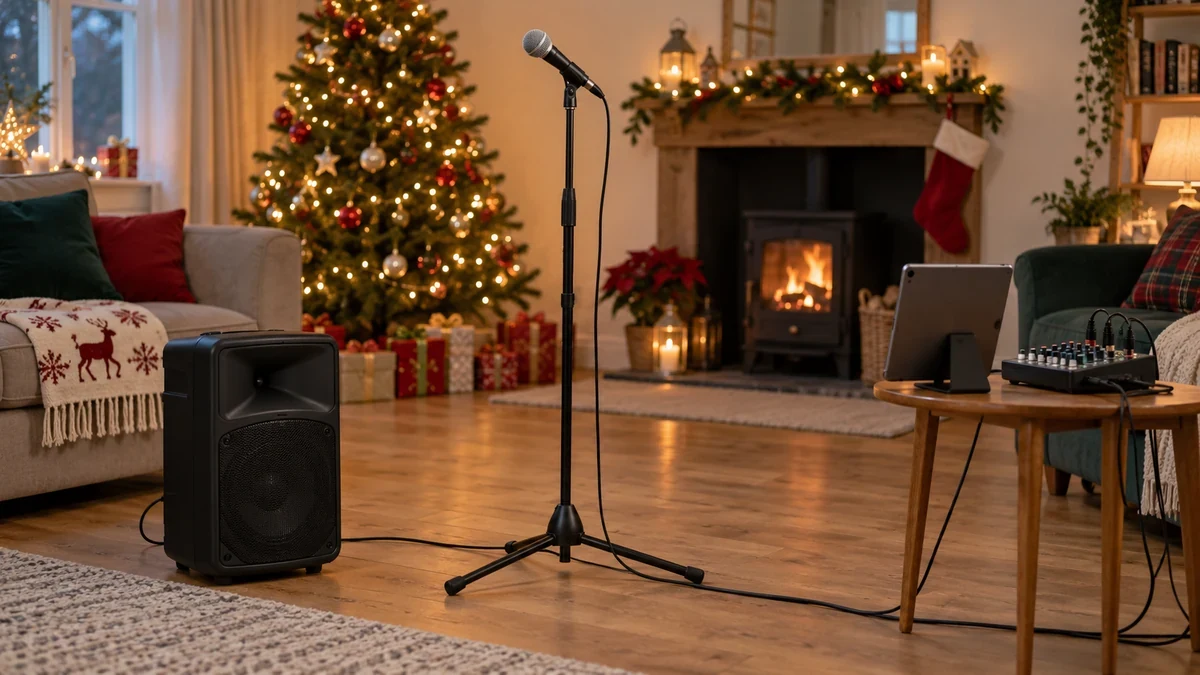
A considered running order can make changes feel natural. Start with music that leaves room for conversation, then move towards a livelier section if that is what the group wants.
Suggested sections and lengths
- Arrival (30–60 minutes): quiet instrumentals, choral music or acoustic recordings while people settle in.
- Dinner (45–90 minutes): gentler Christmas songs and MPB. Slower tracks may fit, but there is no compulsory tempo for a comfortable meal.
- Middle of the party (60–90 minutes): introduce pop, lighter samba or danceable arrangements while preserving a quieter conversation area.
- Approaching midnight (around 30 minutes): choose familiar choruses and a gradual rise in energy, keeping volume and bass considerate.
- Midnight and afterwards: play celebratory favourites, leaving room for people to talk, toast or take a break from dancing.
Making smoother transitions
- Crossfade: if available, try a short overlap and adjust it by ear. Five to ten seconds may work for some tracks but can spoil others.
- Similar keys or tempos: these can help two recordings sit together, especially when the next track has a compatible instrumental opening.
- A bridging track: a suitable instrumental between a slow song and a much faster one may make the change feel less abrupt.
- Volume and equalisation: keep dinner music unobtrusive and avoid sudden jumps in bass or loudness later.
- Remixes: carefully chosen remixes can connect older songs with newer dance tracks; listen for unsuitable lyrics or unexpectedly loud sections.
Sequences to try
- Example 1 — dinner to gentle dancing: piano instrumental → quiet vocal standard → contemporary acoustic cover → gentle remix.
- Example 2 — approaching midnight: choral favourite → familiar pop recording → increasingly rhythmic remix → celebratory favourite.
Practical playback tips
- Playlists by section: separate arrival, dinner, transition and midnight lists so you can adapt when the timetable changes.
- Backup selection: prepare 15–20 recognisable tracks as options, rather than expecting any song to change everyone’s mood instantly.
- Supported settings: test crossfade where available and keep volume under someone’s control throughout the evening.
- Sound check: play the lists through your planned speakers and review anything that sounds awkward in the room.
- Respect the moment: turn the music down or pause it for speeches, prayers, announcements or whenever people need to hear one another.
An example timetable, measured from the start
- 00:00–00:45 elapsed — instrumentals and choral recordings for arrival.
- 00:45–02:00 elapsed — gentle vocal Christmas favourites during dinner.
- 02:00–03:30 elapsed — contemporary covers and lighter samba or pop.
- 03:30–04:00 elapsed — a gradual transition towards livelier music.
- After four hours — celebratory favourites if the party continues. These are elapsed durations, not clock times; schedule your actual midnight moment separately.
Creating playlists on Spotify, YouTube and other services

Use clear names and separate arrival, dinner, transition and midnight sections. These suggestions concern a private gathering: consumer streaming subscriptions do not automatically permit public or commercial playback, and Spotify limits its service to personal, non-commercial use. Source: Spotify: public and commercial use
Practical steps
- Choose the purpose: decide whether you are preparing music for dinner, the whole evening or just midnight.
- Create sections: separate playlists can be easier to adjust than one very long list.
- Choose priority tracks: start with 10–20 options per section, then check their combined duration against your timetable.
- Order by feel: within each section, arrange tracks so changes in energy suit the moment.
- Test playback: listen in order and check whether your account and device allow the playback controls you need.
- Prepare a backup list: keep around 20 familiar tracks ready for requests or a change of plan.
Features differ between services
- Spotify: create a playlist and add a useful description and cover. Its help page currently lists crossfade for Premium; you cannot adjust track-transition features while using Spotify Connect. Check your app and playback setup before relying on them. Source: Spotify: transitions between tracks
- YouTube and YouTube Music: use official recordings and check the running order on your device. Ad-free music playback, background listening and downloads depend on the relevant service and plan; choosing a particular video does not guarantee an interruption-free evening.
- Apple Music, Deezer and Amazon Music: organise separate playlists and check the features actually offered by your account, app and playback device.
- Without crossfade: choose tracks with compatible beginnings and endings. An instrumental can bridge a change in style, but it cannot remove a technical playback gap.
Names, descriptions and covers
- A clear name: identify the occasion and section, for example “Christmas Dinner — Arrival”. Add a year only if it helps your organisation.
- A useful description: describe the mood and approximate duration, such as “60 minutes of gentle dinner music”.
- A recognisable cover: use a festive image you have permission to use, with a simple design that remains clear as a thumbnail.
- Searchable wording: include helpful terms such as “Christmas”, “New Year” or “dinner” in the name or description where supported.
- Duplicate checks: remove accidental repeats and space out any different arrangements of the same song.
Running order and sound adjustments
- Crossfade: use only where supported and test the overlap. A short fade may be enough; choral pieces or distinctive endings may sound better without it.
- Tempo and key: neighbouring tempos or compatible instrumental introductions can help, but musical judgement matters more than matching numbers.
- Equalisation: keep bass restrained during conversation and make later changes modestly.
- Bridging tracks: place an instrumental between very different recordings when that improves the flow.
Optional tools and automation
- Moving playlists: third-party transfer tools such as Soundiiz or TuneMyMusic may help. Check their current permissions, limits and supported services, then verify every match and the running order; transfers can miss tracks or choose different versions.
- Collaboration: invite suggestions from a limited group, then review them before adding them to the playing queue.
- Keep it manageable: use only playback automation you have tested. A straightforward playlist with someone supervising it is often sufficient.
- Offline listening: download through the service’s authorised feature where your plan permits it. Spotify music downloads require Premium, and YouTube Music catalogue downloads generally require its Premium membership. Test access without a connection before the event. Source: Spotify: listening offline Source: YouTube Music: offline downloads
A short checklist before the gathering
- Listen through each section to check order, track versions and volume differences.
- Test transition and equaliser settings on the equipment and account you will use.
- Prepare a main device and a permitted backup such as a phone and a laptop, checking account and download access on each.
- Separate the sections and mark the tracks you particularly want to play.
- Use clear covers and descriptions so it is easy to select the right list during the evening.
Personalising the music for different generations

A personal playlist can include shared memories, recent discoveries and songs people enjoy singing. Ask guests what they like rather than treating age groups as fixed musical categories.
Finding out what guests enjoy
- Ask three simple questions: favourite songs, preferred genres and a request for midnight. A private message or a short form is enough; avoid collecting unnecessary personal information.
- Limit requests if helpful: one or two per household can keep the selection manageable while giving everyone a voice.
- Group by mood and moment: sort requests into dinner, transition and midnight sections rather than assuming preferences solely from a guest’s age.
Ideas for a mixed-age gathering
- Children: consider songs they know and enjoy, with suitable lyrics. Screens and music videos are optional, not essential to joining in.
- Adults: include requested MPB, Brazilian pop and international music linked to memories or current favourites.
- Older guests: ask about favourite recordings, whether choral music, traditional songs or something entirely different. Keep sound levels considerate.
- Shared moments: familiar choruses can encourage a singalong, while anyone who prefers listening should feel equally welcome.
Making participation easy
- Separate sections: let each part of the evening have its own mood and make changes without searching through a long queue.
- Special selections: reserve perhaps three to five songs for a tribute, toast or family memory, with the people involved comfortable about it.
- Managed requests: use private messages or a restricted collaborative list, and check tracks before playing them.
- Optional singalong: choose two or three familiar songs and invite participation without requiring anyone to perform.
Choosing a balanced mix
- An optional 60/40 starting point: try mostly familiar music with a smaller proportion of new recordings, then change the balance to suit your guests. There is no universal formula.
- Varied arrangements: include choral, instrumental, acoustic and pop recordings across different songs rather than repeatedly returning to one title.
- Reserve favourites: 15–20 well-chosen alternatives give you options if the planned music is not right for the moment.
Volume, transitions and checks
- Volume: keep music quiet during dinner and make later adjustments gradually, considering guests and neighbours.
- Transitions: use compatible recordings and supported crossfade settings when they improve the listening experience.
- A rehearsal: listen on the intended equipment beforehand to catch unavailable tracks, playback limits or awkward transitions.
A simple example
- Before dinner: gentle instrumentals and choral recordings as guests arrive.
- During dinner: familiar quieter songs and gentle MPB where it suits the group.
- Approaching midnight: acoustic favourites and carefully chosen remixes that build energy.
- At midnight: a shared favourite for singing or dancing, with space for quieter celebration too.
Bringing the playlist together
Creating a traditional Christmas and New Year playlist starts with choosing the atmosphere and combining familiar songs with newer recordings. Keep Brazilian and international influences that matter to your guests, organise the music into sections and test the running order.
Invite a manageable number of requests, leave room for different tastes and prepare a backup selection. Clear playlist names and a tested playback setup make the evening easier to run than complicated, untried automation.
Thank you for reading. For more practical festive ideas and inspiration, visit the I Love Christmas blog. Use the suggestions here to create your own selection; this article does not include a downloadable or ready-made streaming playlist.
Christmas and New Year Playlist FAQs
How long should the playlist be?
Match it to the event rather than a fixed rule. A long gathering might need three or four hours through arrival and dinner and another two to four hours afterwards, with extra tracks available if plans change.
How can I balance different generations’ tastes?
Ask for requests and combine shared favourites with newer discoveries. A roughly 60/40 familiar-to-new mix is only a starting idea, not a guarantee; one or two requests per household can help keep the list manageable.
What should I do with unexpected requests?
Keep a reserve list of around 15–20 familiar tracks. Let one person review requests and add appropriate recordings without accidentally repeating songs or disrupting a quiet moment.
How can I move smoothly from dinner to the midnight celebration?
Build energy gradually, choose compatible recordings and test short crossfades where supported. Instrumentals can bridge changes in style. Keep volume comfortable rather than making loudness the main way of increasing excitement.
Which service should I use?
Use a service your household knows, then check its actual playback controls, subscription requirements and device support. Do not assume YouTube Music has Spotify’s crossfade controls. Check transferred playlists manually because recordings and availability differ.
How should I test the playlist?
Play each section in order on the intended account and equipment. Check volume, transitions, unavailable tracks, ads, shuffle settings and permitted offline playback, then adjust before guests arrive.
Sources and Further Reading
- Spotify: transitions between tracks
- Spotify: listening offline
- YouTube Music: offline downloads
- Spotify: public and commercial use
- Rádio Câmara: Simone and Então é Natal