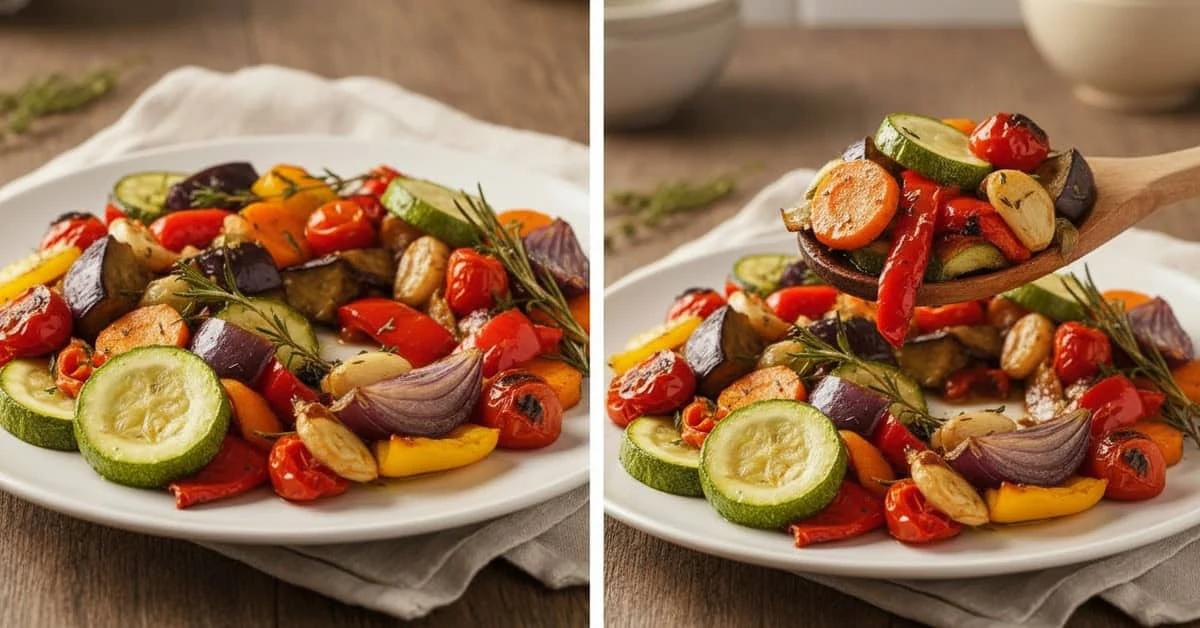
Roasted vegetables with olive oil and herbs make a versatile side dish. This guide covers cutting the vegetables, adding them in stages, using enough trays, seasoning, variations with feta or a sweet glaze, and storing leftovers safely.
Roasted vegetables with olive oil and herbs bring colour and flavour to a festive meal. Follow the simple method below, adjusting the cooking time to the vegetables rather than relying on one timing for everything.
Ingredients for roasted vegetables with olive oil and herbs
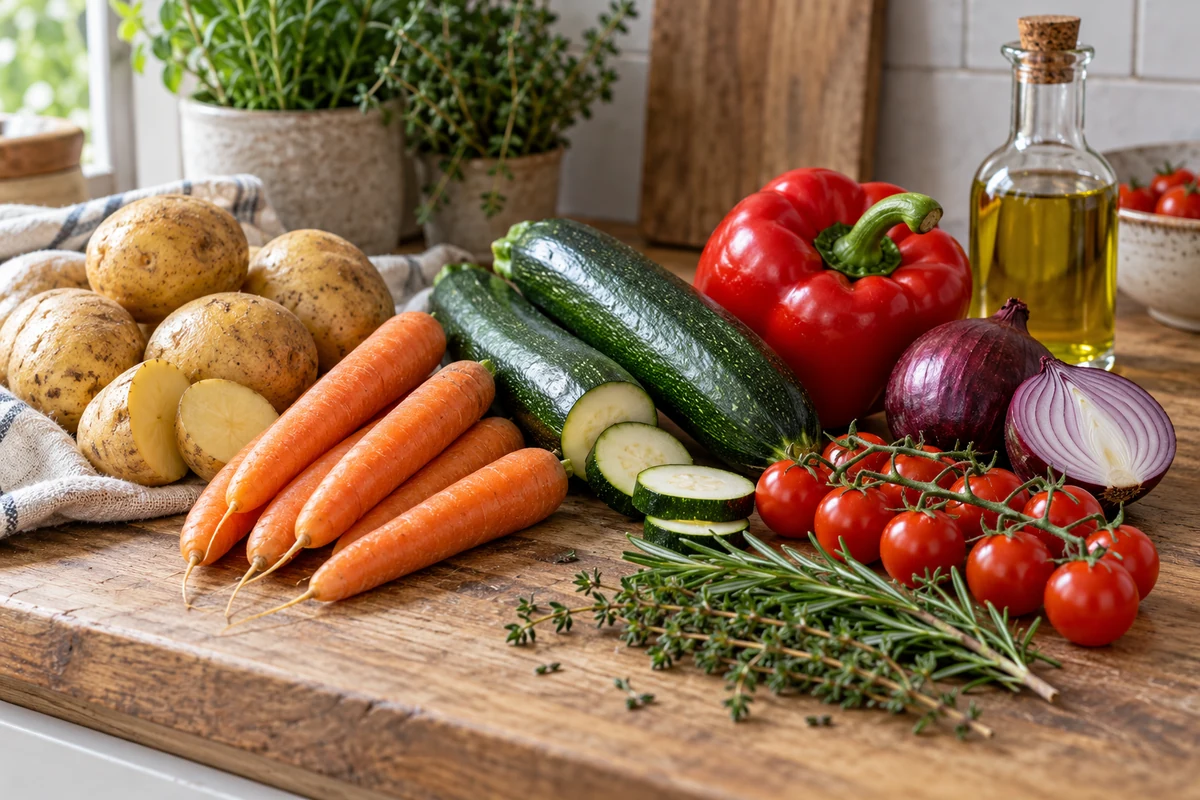
For roasted vegetables with olive oil and herbs, gather:
- 500 g potatoes — washed and cut into roughly 2 cm cubes; sweet potatoes are an alternative, though they may cook faster.
- 3 medium carrots, about 300 g — cut into 1 cm pieces or slim batons; turnips or squash can also be used, with timing adjusted.
- 2 medium courgettes — cut into thick rounds or half-moons; aubergine is an alternative and may need a little more oil.
- 1 red pepper — deseeded and sliced; yellow or green pepper also works.
- 1 large red onion — cut into wedges; white onion or shallots are alternatives.
- 200 g cherry tomatoes — whole or halved; alternatively, use plum tomatoes cut into wedges.
- 3–4 tablespoons olive oil — enough to coat this generous batch lightly; use another oil suitable for roasting if preferred.
- Up to 1 teaspoon salt — start with less and adjust to taste, especially if adding cheese or olives.
- ½ teaspoon ground black pepper — or a smaller pinch of chilli flakes; smoked paprika gives a different flavour.
- 1 tablespoon chopped fresh rosemary — or 1 teaspoon dried; oregano is an alternative.
- 1 tablespoon fresh thyme leaves — or 1 teaspoon dried; a little chopped sage also works.
- 1 tablespoon balsamic vinegar, optional — to finish; lemon juice is an alternative.
- 30–50 g grated hard cheese or crumbled feta, optional — check for vegetarian suitability if needed, as Parmesan is not vegetarian; use nutritional yeast for a vegan finish.
Quick tip: cut each type of vegetable evenly, but give firm roots a head start. Aubergine does not generally need salting; if you choose to salt it, drain and dry thoroughly before roasting.
How to roast vegetables with olive oil and herbs
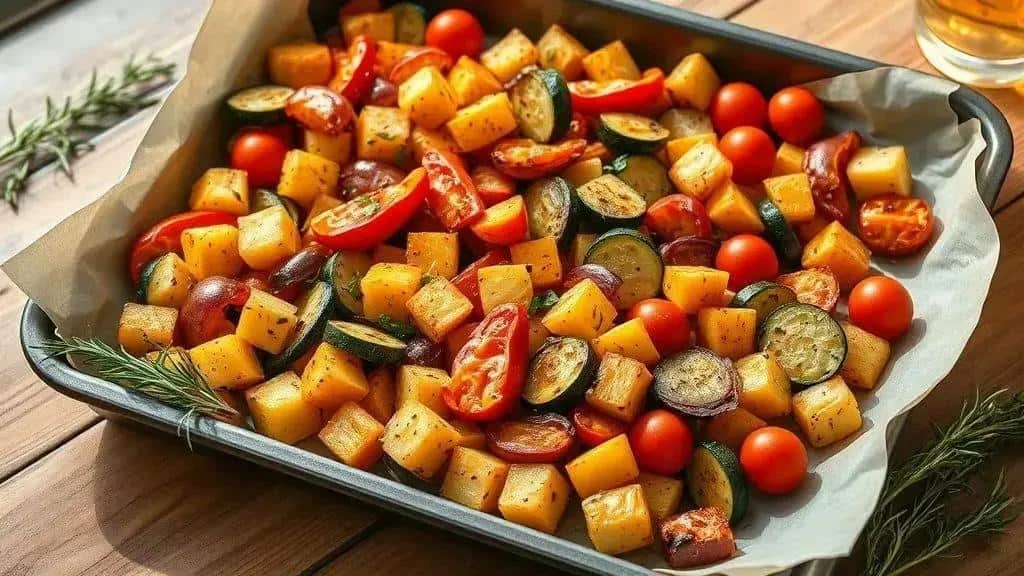
- Preheat the oven: set it to 220°C conventional or 200°C fan. Use two large roasting trays so this batch can fit in a single layer.
- Wash and dry the vegetables with a clean cloth or kitchen paper; excess surface water makes browning harder.
- Cut the vegetables: cut potatoes into 2 cm cubes, carrots into 1 cm pieces, courgettes into thick half-moons, peppers into strips and onions into wedges. Keep the tomatoes whole or halve them. Separate firm roots from quicker-cooking vegetables.
- Season in batches: divide the oil, salt, pepper, rosemary and thyme between the vegetables, tossing each group until lightly coated. Keep the courgettes, peppers, onions and tomatoes aside initially rather than putting everything into the oven at once.
- Spread out the roots: arrange potatoes and carrots on a tray in one layer with gaps between pieces. Lightly oil the tray or use baking parchment rated for the oven temperature.
- Roast in stages: give the potatoes and carrots 15–20 minutes first. Turn them, then add the courgettes, peppers and onions on the second tray. Roast for a further 20–25 minutes, turning as needed and checking each tray separately.
- Add the cherry tomatoes for the final 10–15 minutes, until softened. If using cheese, add it near the end or after roasting; feta softens but does not melt like a grated hard cheese.
- Check for doneness: pierce a potato and carrot with a fork. They should be tender throughout with golden edges. Continue cooking any firm pieces, removing softer vegetables if they are ready sooner.
- Finish out of the oven: drizzle with the optional tablespoon of balsamic vinegar and scatter over a few fresh herbs.
- Serve: transfer to a warm platter and serve promptly as a side, or combine with grains and a protein source for a main meal.
Quick tips and substitutions
- Fan ovens: use 200°C rather than 220°C conventional, and check as cooking progresses.
- For better browning: do not overcrowd the trays; two spacious trays are more useful than one heaped tray.
- Substitutions: try sweet potato instead of potato, or aubergine instead of courgette. Adjust the oil and cooking time for the chosen vegetables.
- Vegan version: omit cheese or finish with nutritional yeast. Use maple syrup instead of honey if making the sweet variation.
- Alternative seasonings: try smoked paprika, cumin or a small pinch of chilli flakes.
Roasted vegetable variations
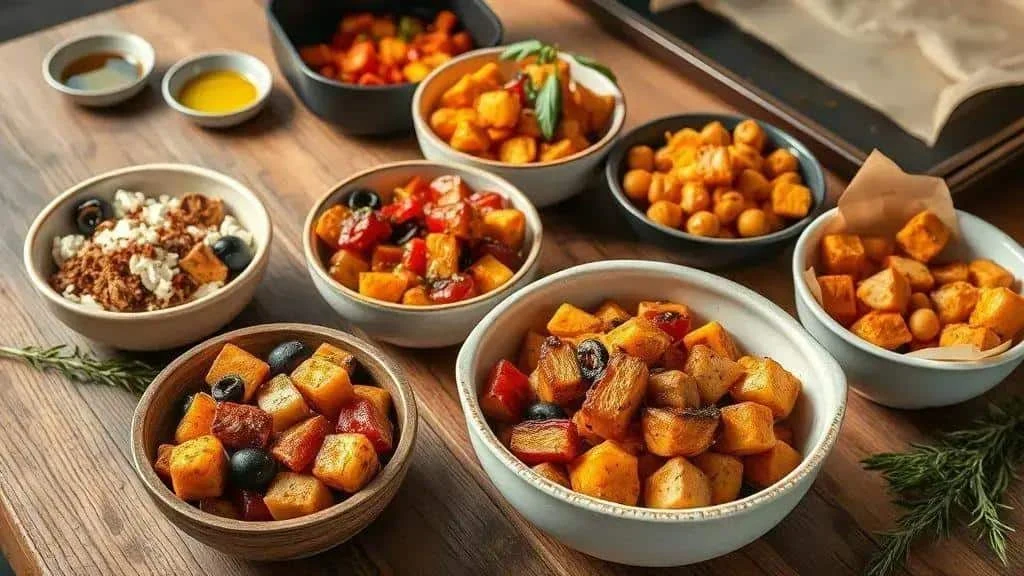
Try these ways to vary your roasted vegetables with olive oil and herbs.
Mediterranean-style with cheese and olives
- Add: 100 g crumbled feta or 30–50 g grated hard cheese, plus 50 g sliced black olives. Choose vegetarian-labelled cheese if needed.
- Extra seasoning: 1 teaspoon dried oregano and the zest of 1 lemon.
- Method: toss the cooked vegetables with the olives and scatter over the cheese at serving time. Reduce the salt in the base recipe.
Smoky and spicy
- Add: 1 teaspoon smoked paprika and up to ¼ teaspoon chilli flakes.
- Alternative: use ½ teaspoon cumin for an earthy flavour.
- Method: mix the spices with the oil before coating the vegetables, checking that they do not scorch on the tray.
Autumn vegetables with honey and balsamic
- Add: 1 tablespoon honey and 1 tablespoon balsamic vinegar; use maple syrup for a vegan version.
- Vegetables: replace 300 g of the potatoes or carrots with cubed squash or sweet potato.
- Method: drizzle with the glaze for the final 5 minutes and watch closely, as the sugars burn easily.
Adding protein and vegan options
- Chickpeas: add 200 g cooked or tinned chickpeas, drained and dried, to a tray for the final 20 minutes or until hot through.
- Tofu: toss 200 g firm tofu cubes with 1 tablespoon soy sauce and 1 tablespoon oil. Roast separately until hot through and golden, following the tofu packet instructions, then combine with the vegetables.
- Savoury vegan finish: sprinkle over 2 tablespoons nutritional yeast instead of cheese.
Alternative cooking methods
- Oven, 220°C conventional or 200°C fan: allow approximately 35–45 minutes for the potato and carrot pieces, adding quicker-cooking vegetables later. Check tenderness rather than using time alone.
- Air fryer: cook in small, uncrowded batches according to the appliance guidance, often around 190–200°C. Start checking softer vegetables after 12–15 minutes; potatoes and carrots may take longer. Shake or turn regularly.
- Barbecue: use a suitable vegetable basket for courgettes, peppers and onions, turning until tender. Dense roots need smaller pieces or separate pre-cooking; do not assume they cook as quickly as courgettes.
Serving combinations
- Serve with: quinoa, brown rice, grilled proteins or a salad made with safely chilled leftovers.
- Fresh finish: add rocket, parsley or mint just before serving.
- Lunch boxes: keep sauces such as tahini dressing, pesto or herbed yoghurt in separate containers. Chill and transport the whole meal safely.
Seasoning, texture and oven timing
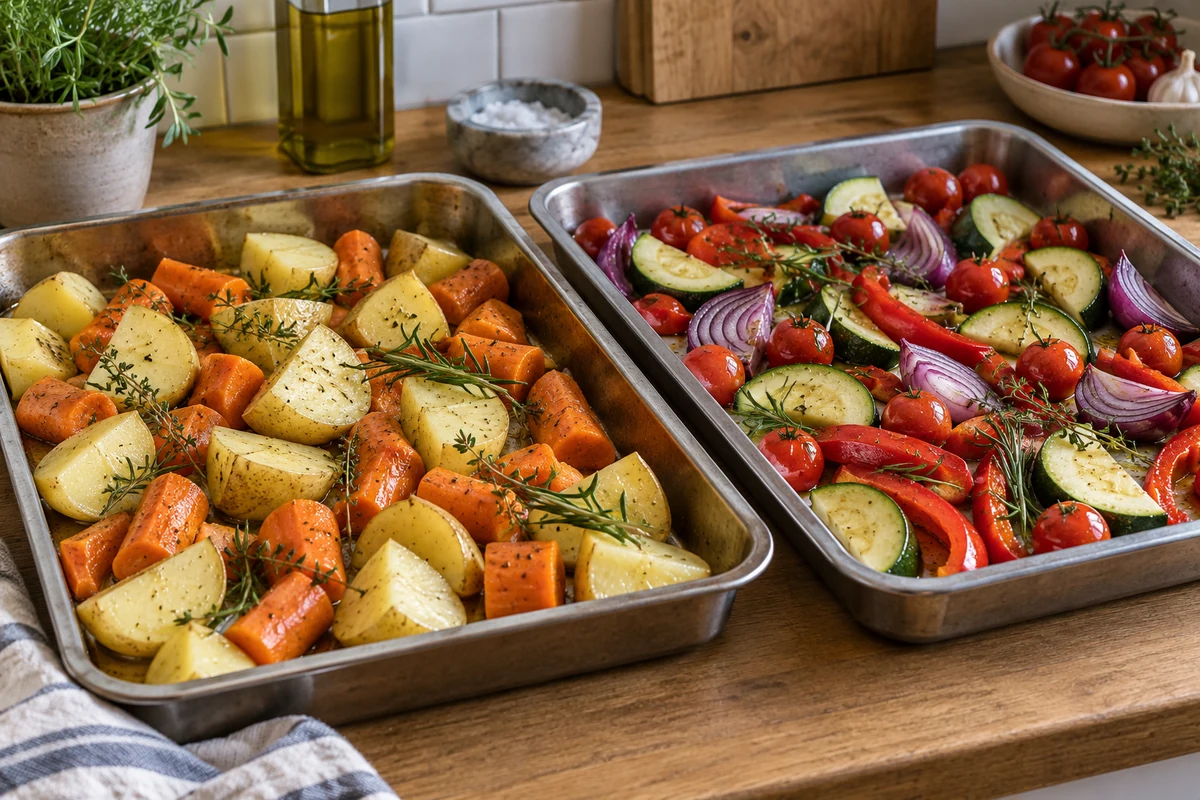
Practical tips for seasoning and roasting
- Oil: start with enough to coat the vegetables lightly. This large batch uses 3–4 tablespoons; aubergine may need more than courgette. Avoid pools of oil.
- Salt: season modestly before roasting and adjust after tasting the cooked vegetables, especially with salty cheese or olives.
- Pepper: use about ½ teaspoon black pepper for this batch, or a smaller amount of chilli flakes according to taste.
- Herbs: rosemary and thyme suit roasting. Use roughly a third as much dried herb as fresh, and save delicate herbs for serving.
- Acidity: a tablespoon of balsamic vinegar or lemon juice at the end lifts the flavour; add more only after tasting.
- Other seasonings: try 1 teaspoon smoked paprika, ½ teaspoon cumin or a little garlic powder, without necessarily adding all three.
Cooking temperatures and timings
- Conventional oven, 220°C: allow around 35–45 minutes for the roots, turning partway through and adding softer vegetables in stages.
- Fan oven, 200°C: use the same staged method and check regularly. Tray size, spacing and piece thickness affect the cooking time.
- Air fryer: work in small batches and follow your appliance guidance. Check soft vegetables early and allow longer for dense roots, shaking the basket regularly.
- Grill finish: briefly use the grill for extra colour only in a grill-safe tray, without exposed baking parchment. Watch continuously to prevent burning.
- Order matters: start potatoes and carrots first, add courgettes, peppers and onions after 15–20 minutes, then add tomatoes for the final 10–15 minutes.
How to check they are ready
- Fork test: a fork should go through potato and carrot pieces easily; browned surfaces alone do not mean the centres are cooked.
- Colour: look for golden edges and lightly caramelised surfaces, rather than blackened or burnt pieces.
- Texture: aim for tender centres and some browned edges. Tomatoes will naturally be softer than potatoes or carrots.
- Serving: let the fiercest heat subside briefly if needed, then serve. Do not rely on a rest to cook hard potato centres.
Small details that help
- Avoid piling up: use two trays or cook in batches so air can circulate.
- Dry the vegetables: remove excess water before adding oil, helping the surfaces roast rather than steam.
- Distribute the oil: toss each group in a bowl so the coating is even.
- Add delicate herbs at the end: basil and parsley keep their freshness when scattered over after roasting.
Storage, leftovers and accompaniments
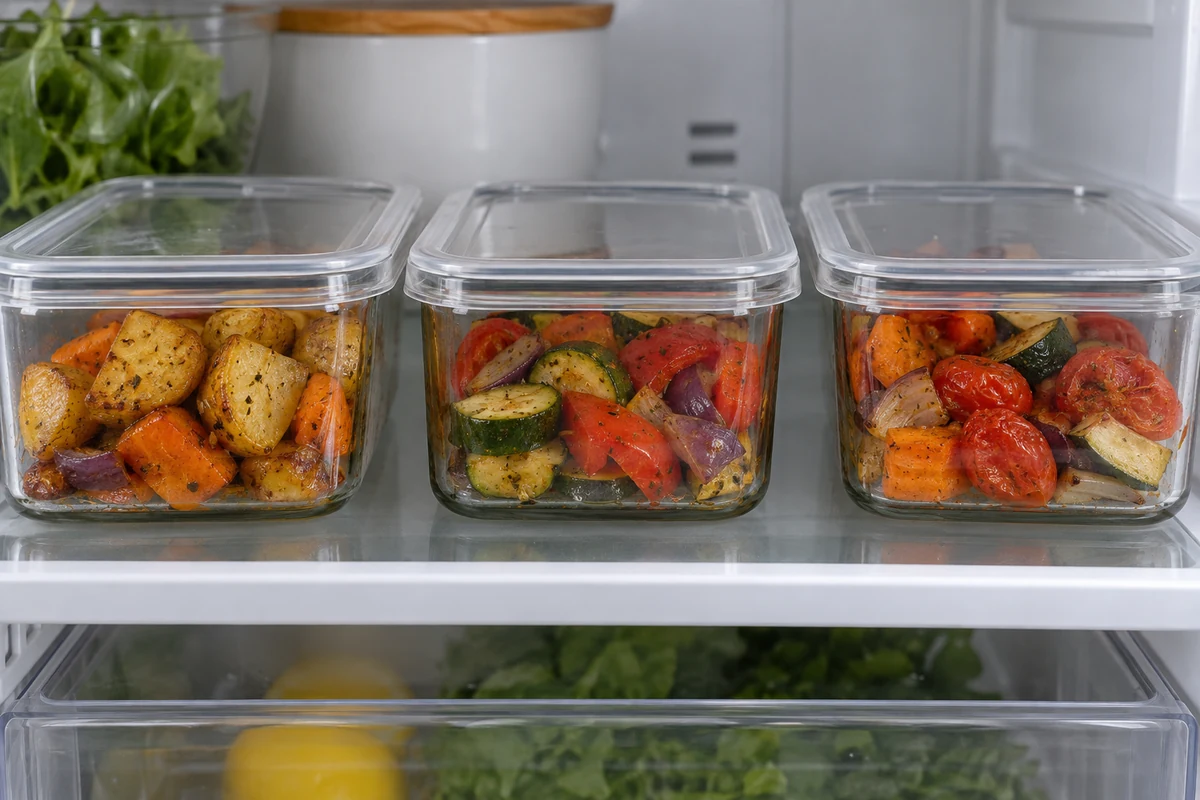
Storage: divide leftover vegetables into shallow containers to cool quickly, then cover and refrigerate within 1–2 hours. Do not leave them out indefinitely waiting for them to become completely cold.
Safe storage
- In the fridge: keep covered at 5°C or below and eat within 48 hours, or freeze sooner.
- In the freezer: freeze promptly in labelled portions and aim to use within 2 months for quality. Courgettes and tomatoes may soften noticeably after thawing.
- Cooling: spread into shallow portions rather than leaving a deep, hot pile. Refrigerate within 1–2 hours; a fixed 20-minute wait is not a reliable guide for every quantity.
- Portions: store individual amounts so you can use what you need without repeatedly warming the whole batch.
Ways to use leftovers
- Salad: combine safely chilled vegetables with leaves and dressing, or reheat them thoroughly first if serving warm. Add freshly cooked grains if wanted.
- Pasta: reheat the vegetables until steaming hot throughout and toss with freshly cooked pasta, oil and optional cheese.
- Soup: blend the vegetables with stock, then heat the soup thoroughly, stirring to avoid cold spots.
- Tarts and quiches: drain excess liquid and use with eggs and cheese, cooking the filling fully and ensuring the vegetables are hot throughout.
- Sandwiches and wraps: use safely chilled vegetables with hummus, fresh cheese and leaves; keep the assembled meal chilled until needed.
- Frittata: add to beaten eggs and cook until the eggs are set and the filling is steaming hot throughout.
- Grain bowls: pair with freshly cooked quinoa, brown rice or couscous and your chosen protein. Follow the stricter rice storage guidance if combining and chilling rice.
Accompaniment ideas
- Protein: serve with cooked chicken, baked fish, meat or marinated tofu.
- Grains and pulses: try quinoa, brown rice, couscous or lentils.
- Sauces and toppings: herbed yoghurt, pesto, tahini dressing, balsamic glaze, grated hard cheese or nutritional yeast all offer different finishes.
- Crunch: add toasted seeds or chopped nuts, taking account of guests’ allergies.
Keeping flavour and texture
- Avoid excess liquid: drain any pooling juices or oil before storing if the vegetables are very wet.
- Check seasoning later: adjust after reheating and tasting rather than adding extra salt before storage.
- Reheating: spread on a tray at 180°C conventional or 160°C fan, or use a frying pan, until steaming hot throughout. The time depends on quantity and thickness. Reheat only once; a microwave works too, although the vegetables will be softer.
- Freezing: freeze without sauce where possible. Defrost in the fridge, use within 24 hours of defrosting, and add fresh toppings at serving time.
A versatile vegetable side
Roasting with olive oil and herbs is a straightforward way to make the most of vegetables. Give firm roots a head start, leave room on the trays and check tenderness as well as colour.
Use the variations to suit the rest of your meal, and cool and store leftovers promptly before using them in salads, pasta or grain bowls.
For more easy recipes and festive ideas, follow the I Love Christmas blog.
FAQ: roasted vegetables with olive oil and herbs
How should I store roasted vegetables in the fridge?
Cool quickly in shallow portions, cover and refrigerate within 1–2 hours. Keep at 5°C or below and eat within 48 hours.
Can I freeze roasted vegetables?
Yes. Freeze promptly in suitable containers, preferably in individual portions, and use within 2 months for quality. Defrost in the fridge and use within 24 hours. Some vegetables will soften.
What is the best way to reheat them?
A hot oven or frying pan helps restore some colour. Heat until steaming hot throughout rather than relying on a fixed number of minutes, and reheat only once. A microwave is suitable but gives a softer texture.
Which substitutions work well?
Try sweet potatoes instead of potatoes, aubergine instead of courgettes, or a different oil suitable for roasting. Adjust cooking times and oil as needed; aubergine does not always require salting.
How do I adjust for different ovens and quantities?
Use 220°C conventional or 200°C fan and give potatoes and carrots a head start, allowing around 35–45 minutes overall for the roots. Spread across enough trays and check each vegetable. For an air fryer, cook smaller batches following the appliance instructions.
Sources and Further Reading
- Food Standards Agency: cooking food safely
- Food Standards Agency: chilling, freezing and defrosting food safely