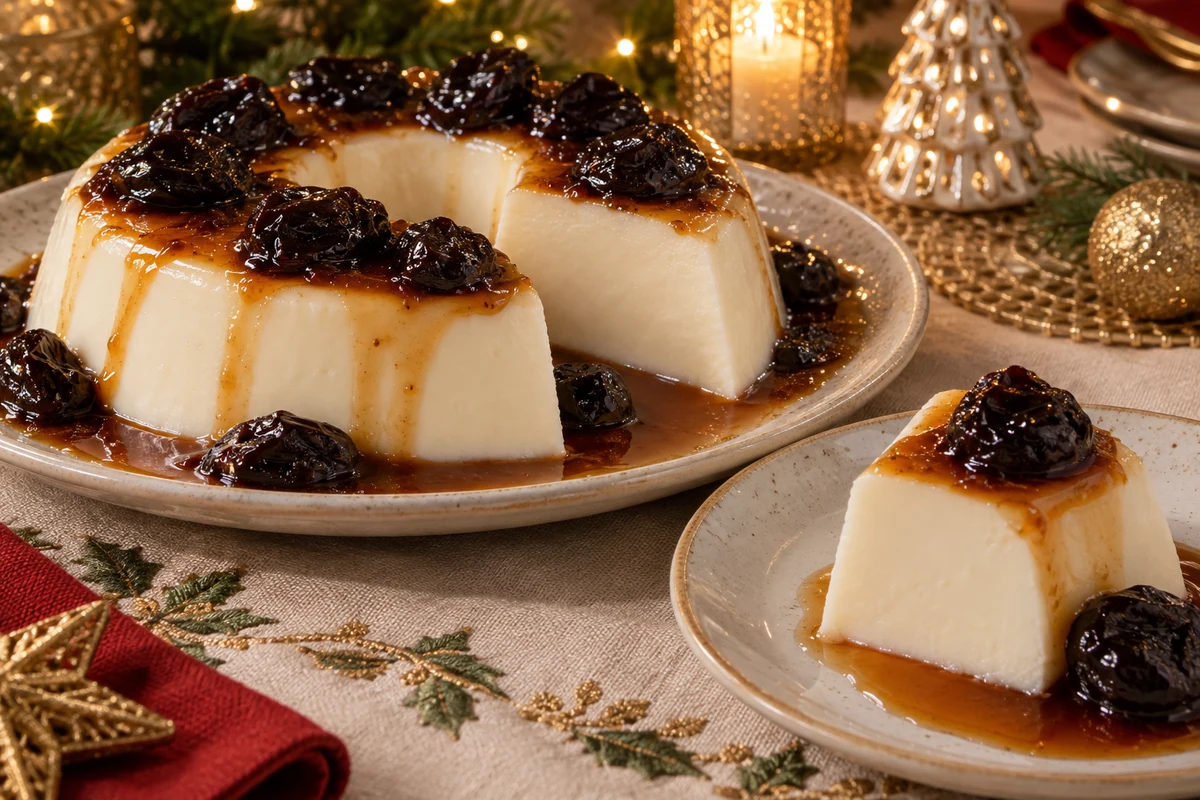
Brazilian coconut blancmange, known as manjar branco, is made with milk, coconut milk and cornflour. Cook until thickened, chill until set and serve with prune syrup. This guide includes measured ingredients, vegan variations, troubleshooting and refrigerated storage advice.
Brazilian coconut blancmange is a smooth, chilled dessert often served with dark prune syrup. Follow the measured method below for a pudding that holds its shape, with ideas for individual servings and variations.
Ingredients for coconut blancmange
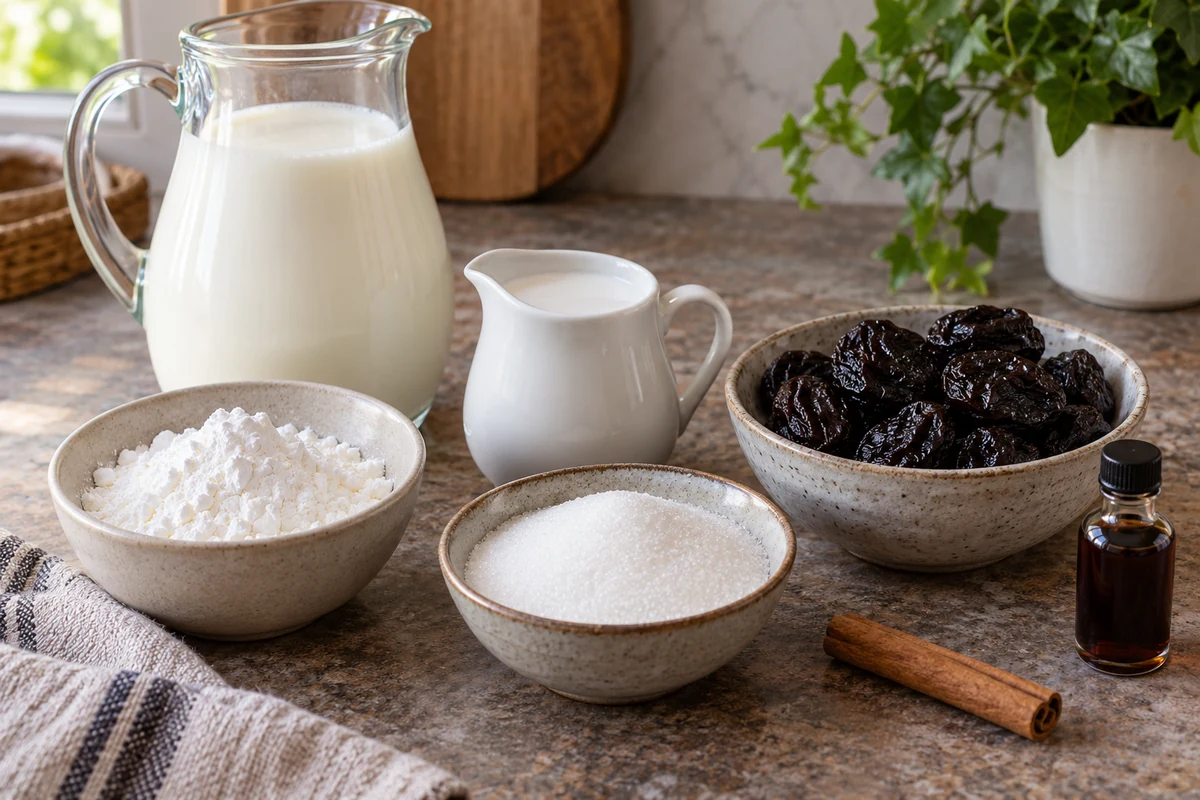
For a creamy coconut blancmange, gather:
- 1 litre whole milk — semi-skimmed milk is an alternative, with a less rich result.
- 200 ml coconut milk — use canned coconut milk, mixed well; coconut cream and thin coconut drinking milk are not direct equivalents.
- 200 g caster sugar — reduce modestly to taste if preferred; demerara changes the colour and flavour.
- 120 g cornflour — the fine white starch sold as cornstarch in some countries, not yellow cornmeal. It is naturally gluten-free, but check labels and cross-contact requirements if needed.
- Condensed milk variation, optional — it is not needed in this measured base recipe. Adding a whole tin changes the liquid, sugar and setting balance; use a separately tested condensed-milk recipe rather than stirring a tin into the finished pudding.
- A small pinch of salt — to balance the flavour.
- 1 teaspoon vanilla extract, optional — or a little finely grated lemon zest.
- 15 g butter, optional — for a richer finish; omit or use a suitable dairy-free alternative for a vegan version.
Ingredients for the prune syrup
- 200 g pitted prunes — dried plums, not fresh plums; fresh fruit makes a different sauce.
- 250 ml water, plus a little extra if needed — to soften the prunes and make a pourable syrup.
- 100 g sugar — adjust to taste according to the sweetness of the prunes.
- 1 tablespoon lemon juice — to balance sweetness, not to make the sauce shelf-stable.
Quick tip: replacing some dairy milk with plant milk changes flavour and richness, but does not automatically make the dessert lower in calories or dairy-free. Keep the total milk quantity consistent.
How to make creamy coconut blancmange
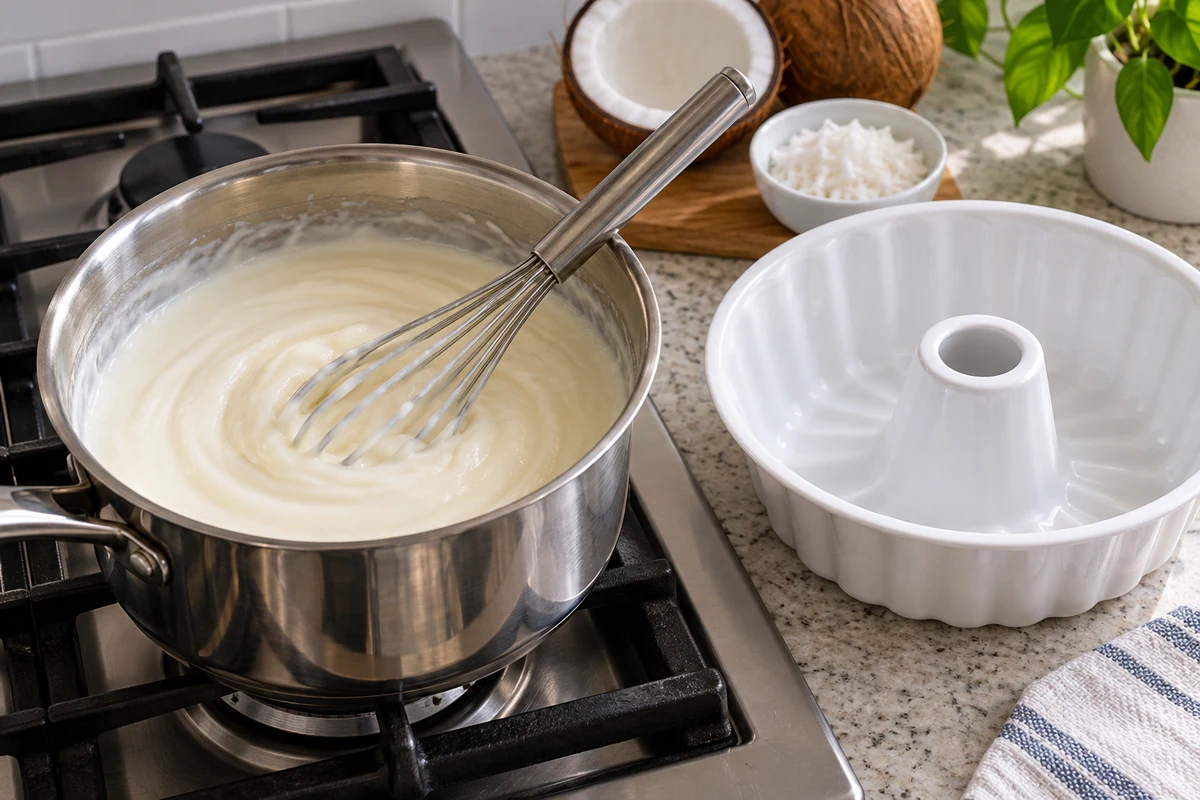
- Mix the cornflour: take 200 ml from the litre of cold milk and whisk it with the 120 g cornflour until smooth.
- Warm the remaining milk: put the remaining 800 ml milk, 200 ml coconut milk, sugar and pinch of salt in a large saucepan. Warm over a medium-low heat, stirring to dissolve the sugar.
- Add the cornflour mixture: stir the slurry again, then pour it gradually into the warm milk while whisking continuously.
- Cook until thickened: stir over a moderate heat, scraping the base and corners, until the mixture thickens and gently bubbles. Continue stirring for 1–2 minutes, or as directed by the cornflour packet, to cook the starch fully. Do not rely only on a fixed total time.
- Finish: remove from the heat and stir in the optional butter and vanilla. Do not add an extra tin of condensed milk at this stage.
- Check the texture: the hot mixture should be thick and smooth but still spreadable. It will firm further as it chills; avoid adding large amounts of extra milk simply because it looks thick.
- Fill the mould: rinse a heatproof mould of about 1.5 litres with cold water and shake out excess. Spoon in the hot mixture and smooth the top. Individual dishes are an alternative and cool more quickly.
- Cool promptly: let the initial steam subside, then refrigerate within 1–2 hours of cooking. Use smaller portions if a large mould is cooling slowly. Cover with suitable food wrap or a lid; only place wrap against warm food if the product permits it.
- Chill to set: refrigerate for at least 4–6 hours, preferably overnight, until cold throughout and firm enough to unmould.
- Unmould carefully: loosen the edge gently if necessary. Briefly dip the outside of a suitable mould in warm water, dry it and invert onto a serving plate. Avoid thermal shock with glass dishes.
- Add the syrup: spoon chilled prune syrup over the top, keeping some in a jug for serving.
- Serve chilled: cut into portions or serve individual puddings, with softened prunes and an optional mint leaf.
Prune syrup: method and storage
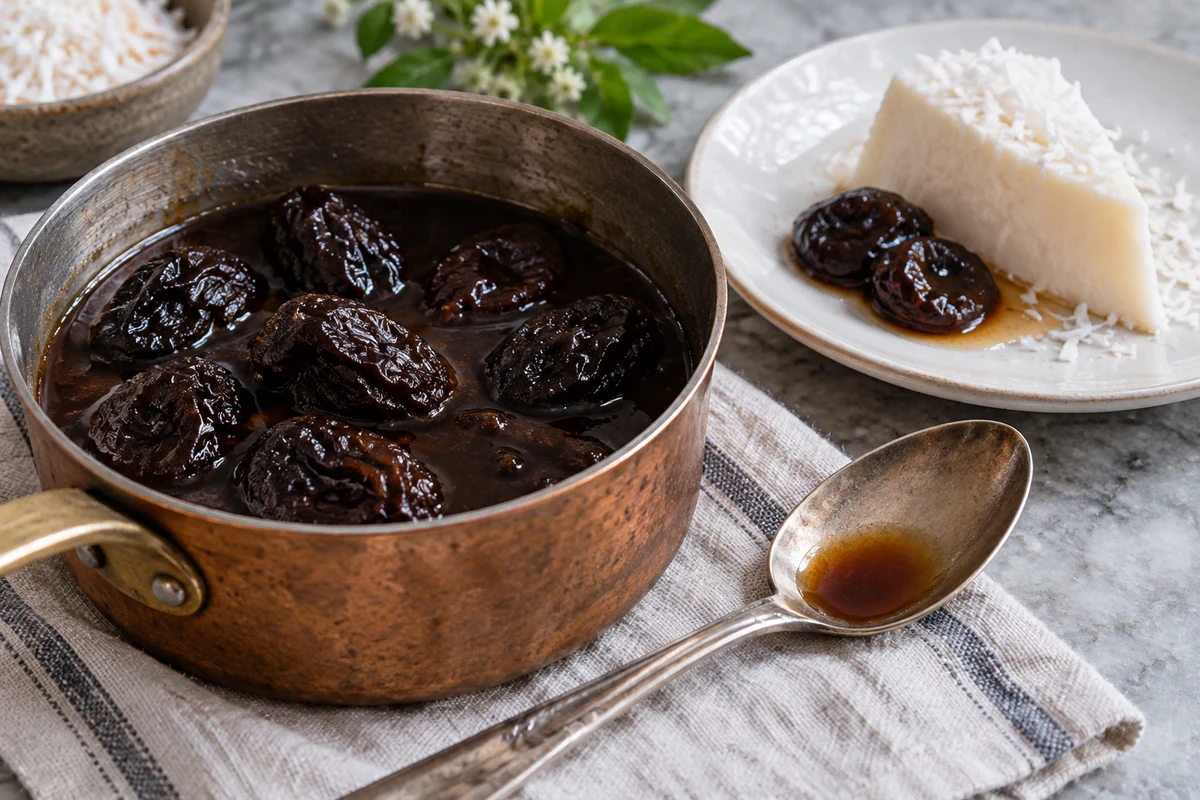
Prune syrup ingredients
- 200 g pitted prunes — check for any remaining stones.
- 250 ml water, plus extra if needed — enough to make a sauce rather than a dry paste.
- 100 g sugar — use less if preferred; brown sugar gives a deeper flavour.
- 1 tablespoon lemon juice — for flavour; it does not establish a safe preserving recipe.
- 1 teaspoon cornflour, optional — mixed with 1 tablespoon cold water, only if the finished sauce needs thickening.
Method
- Soften the prunes: put them in a saucepan with the 250 ml water. Very dry prunes can stand in the water briefly before heating.
- Simmer: add the sugar and warm gently, stirring until dissolved. Simmer for roughly 10–15 minutes, until the prunes are plump and tender, adding water if the sauce becomes too thick.
- Add lemon: stir in the lemon juice and simmer briefly, then taste the cooked sauce carefully after cooling a spoonful.
- Choose the texture: leave the prunes whole or lightly mash a few for a thicker sauce. For a smooth purée, cool enough to handle safely and use suitable blending equipment according to its instructions; never seal very hot liquid in an unsuitable blender.
- Strain if wanted: pass a blended sauce through a sieve for a smoother finish, reserving some whole prunes for serving.
- Thicken only if needed: return a thin sauce to the pan, stir in the optional cornflour slurry and simmer while stirring for 1–2 minutes, or as directed on the packet.
- Cool promptly: transfer to a shallow clean container and refrigerate within 1–2 hours. This is a fresh sauce, not a shelf-stable preserve.
Storage
Refrigeration: store covered at 5°C or below and use within 48 hours, or freeze promptly. Use a clean spoon each time.
Freezing: freeze portions in suitable containers with space for expansion, aiming to use within 3 months for quality. Defrost in the fridge and use within 24 hours.
Containers: wash food-safe containers thoroughly and follow their cleaning instructions. A clean or sterilised jar does not make this untested syrup safe for long storage.
When to discard: discard sauce with mould or an unusual smell, but do not rely on appearance or tasting to prove safety. Follow the storage time even when it looks normal.
For longer storage: freeze it. Adding a little more sugar or lemon juice does not establish a longer safe fridge life.
Coconut blancmange variations
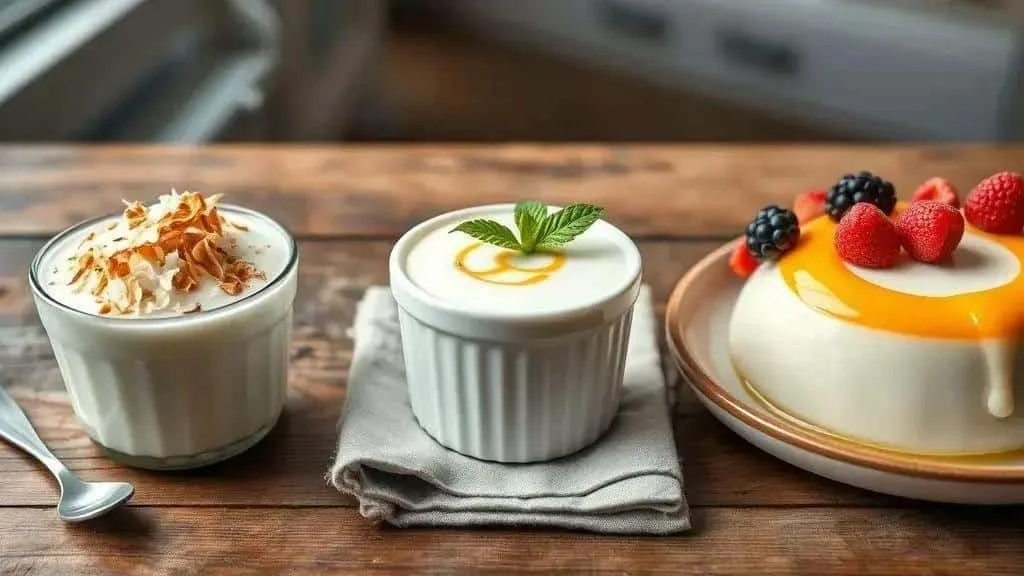
Adapt coconut blancmange with plant milk, less sugar or fruit toppings, keeping track of the total liquid and starch.
Vegan variation
Replace the dairy ingredients completely and test unfamiliar plant products in a small batch if the pudding must unmould neatly.
- 1 litre unsweetened plant milk plus 200 ml canned coconut milk — keep the total at 1.2 litres, as in the main recipe; choose plant milk to suit dietary needs.
- Up to 200 g sugar — reduce modestly to taste. Sweeteners vary substantially, so do not use a fixed cup-for-cup replacement.
- 120 g cornflour — weigh it for consistency; rice flour is not a direct replacement with the same result.
- A small pinch of salt — optional.
- 1 teaspoon vanilla or a little lemon zest — for flavour.
- 1 tablespoon coconut oil, optional — or omit the extra fat.
Method: follow the same cornflour slurry and cooking steps, stirring until gently bubbling and fully thickened. Chill thoroughly before assessing the final texture.
Less rich or less sweet variation
You can change the richness and sweetness without describing the pudding as a tested low-calorie recipe.
- 1 litre semi-skimmed or skimmed milk, plus the 200 ml coconut milk — this reduces the dairy milk’s fat contribution.
- 100–150 g sugar — choose according to taste, remembering that the prune sauce adds sweetness.
- 120 g cornflour — keep the measured starch quantity for this variation.
- 1 teaspoon vanilla extract — optional.
- Leave out the optional butter and condensed milk — do not replace milk with water or add a tin of ‘light’ condensed milk without adjusting the recipe.
Method: cook the starch fully as in the main method, then cool promptly and refrigerate until set.
Fruit variation
Use fruit as a topping for a more predictable result than adding large amounts of acidic purée to the milk mixture.
- The standard milk and coconut-milk base — prepare as above.
- 120 g cornflour — for the base pudding.
- A small bowl of fruit sauce or purée — try strained passion fruit, mango purée or cooked and cooled strawberry compote.
- Sugar, to taste, for the fruit topping — use only as needed; this is separate from the sugar in the pudding.
- A little lemon juice, optional — for the fruit sauce rather than the hot milk base.
Method: make and chill the blancmange normally, then spoon the fruit sauce over just before serving. Acidic or watery fruit mixed into the base can alter setting and cause dairy milk to split.
General advice
Texture and stability: keep clear weights and liquid measurements, cook the starch fully and cool promptly. Test a small batch before making a large mould with new ingredients.
Troubleshooting the texture
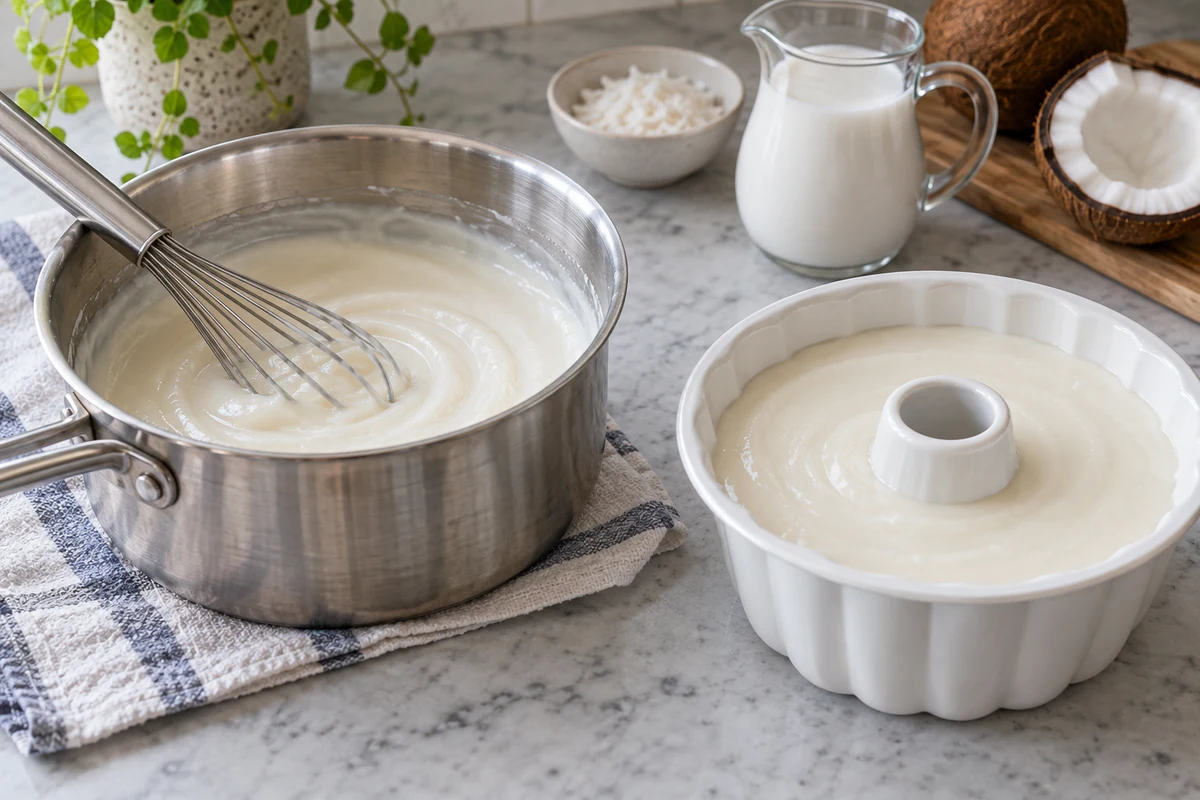
Most texture problems come from starch measurement, mixing or cooking. Assess the pudding after sufficient chilling before trying to alter it.
Preventing and fixing lumps
- Whisk early: while the mixture is still cooking, whisk firmly to break small lumps. If using a stick blender, take the pan off the heat and follow the equipment’s guidance to avoid hot splashes.
- Sieve if necessary: pass the hot mixture carefully through a suitable sieve into a heatproof bowl.
- Do not add starch just for lumps: extra cornflour thickens the dessert further but does not remove clumps. Mix the original cornflour smoothly with cold milk next time.
If the pudding is too soft
- Check before adding starch: first allow enough chilling time. If the freshly made mixture was clearly under-thickened, it can be returned promptly to the pan with a small cornflour slurry and cooked fully; do not repeatedly reheat a stored dessert.
- Chill longer: a large mould may need overnight refrigeration. A warm centre will not hold its shape well.
- Check measurements: weigh the cornflour and measure all the liquids, including coconut milk.
If the pudding is too firm
- Adjust while cooking: a small splash of hot milk can loosen an excessively stiff fresh mixture, but too much will prevent setting. For an already chilled pudding, serve smaller portions with extra sauce rather than repeatedly melting it.
- Review the starch: too much cornflour is a common reason for an overly firm result. Use weighed amounts next time.
A skin or cracked surface
- Cool safely: let the initial steam subside and refrigerate promptly, within 1–2 hours. Do not leave the pudding out for a prolonged ‘gradual’ cooling period.
- Cover suitably: a lid or food wrap helps protect the surface; follow the wrap manufacturer’s guidance for contact with warm food.
- Smooth gently: level the surface before chilling and hide minor marks with sauce. Do not use a blowtorch on food wrap or pour hot water over the pudding to repair a skin.
A grainy texture
- Possible causes: uneven mixing, insufficiently dispersed starch or scorching can make the mixture grainy. Keep the heat moderate and scrape the pan as you stir.
- Strain when appropriate: a sieve can remove small lumps, but it will not remove a burnt flavour. Avoid scraping a scorched pan base into the mixture.
Quick prevention checklist
- Mix cornflour with cold milk before adding it to the warm base.
- Cook while stirring until the mixture gently bubbles and the starch is fully cooked.
- Measure accurately, especially the starch and total liquid.
- Cool promptly and cover, refrigerating within 1–2 hours.
- Check the hot mixture is smooth and thickened, remembering that final firmness develops during chilling.
Test a small batch before changing several ingredients or making a large quantity.
Presentation ideas for Christmas
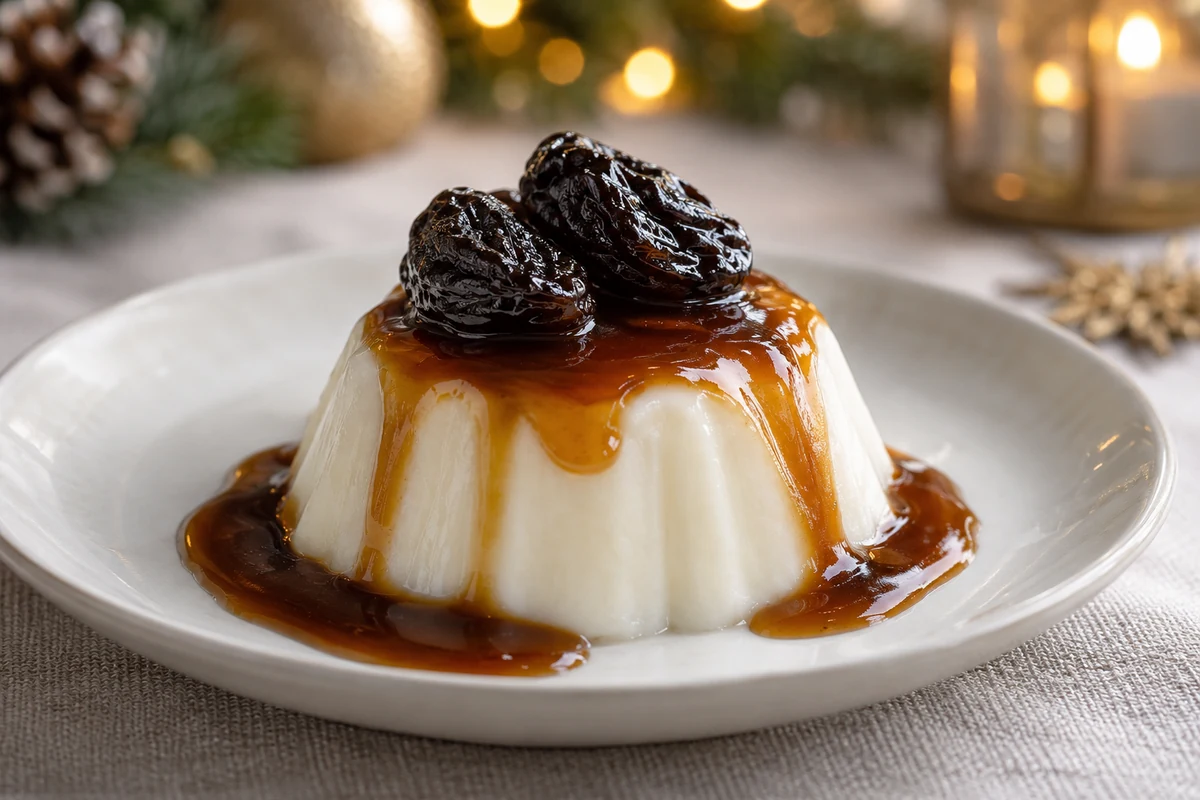
- Individual portions: use small moulds or serving dishes of around 120–150 ml; they are convenient to serve and chill.
- Sauce on the side: offer prune syrup in a jug and add one or two tablespoons per serving to taste.
- Simple garnish: add a softened prune, a little toasted coconut, lemon zest or a mint leaf.
- Colour contrast: a pale plate makes the dark syrup stand out.
- Crunch: a small sprinkle of chopped pistachios or almonds contrasts with the smooth pudding; make nut allergens clear.
- Shared presentation: place the unmoulded pudding on a stable platter with extra sauce alongside.
- Table decoration: keep candles and non-edible greenery well away from the dessert and serving area.
- Transport: carry the set pudding and sauce separately in covered containers, in a chilled cool box with frozen packs.
- Serving temperature: serve chilled and bring out only shortly before it is needed.
Plating individual servings
- Unmould gently: loosen the edge if needed and briefly warm the outside of a suitable mould. Avoid sudden temperature changes with glass.
- Position on the plate: leave room around the pudding for a little sauce.
- Add syrup: spoon over one or two tablespoons, keeping extra available separately.
- Finish: add a softened prune and an optional small garnish.
- Serve promptly: arrange the finished plates on a stable tray and take them to the table.
Prepare ahead: unmould a few portions in advance if helpful, keeping them covered in the fridge and adding sauce near serving time.
Storage, yield and preparing for sale
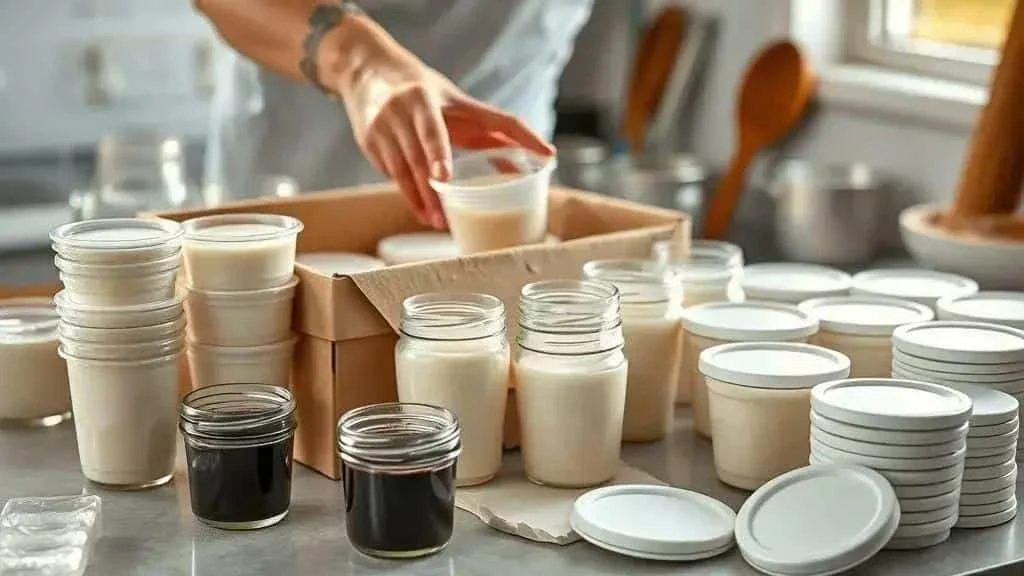
If you plan to sell the dessert, treat the recipe as a starting point. Commercial preparation needs suitable food-safety procedures, labelling and a validated shelf life rather than an assumed profit or storage claim.
Estimated yield
The base recipe makes approximately 10–12 small portions, depending on the mould and serving size. Measure the finished yield of your own batch before promising a fixed number of portions.
Portions and packaging
- Individual portions: containers around 120–150 ml suit small servings; larger pots will reduce the yield.
- Packaging: use food-safe lidded containers appropriate for the product, temperature and intended reuse.
- Separate sauce: a small sealed pot makes transport and portioning easier.
- Labelling: follow the rules for how the food is packed and sold. List ingredients accurately and provide required allergen information, including milk and any relevant allergens in alternatives or toppings.
Storage and shelf life
- Home storage: keep covered at 5°C or below and eat within 48 hours of preparation. This household guidance is not a validated commercial shelf life.
- Freezing: cornflour-thickened milk puddings can separate or become watery after thawing. Test a small portion first rather than promising that a whole mould will freeze well.
- Transport: use insulated containers and frozen packs to keep the dessert chilled until delivery or serving.
- Handling: use clean, covered containers and utensils, keeping ready-to-eat food separate from raw ingredients.
Costing portions
For a costing exercise, add ingredients, packaging, energy, labour and other overheads, then divide by the number of saleable portions. Include waste and delivery costs where relevant.
- Basic calculation: total batch cost divided by saleable portions gives the cost per portion before profit.
- Selling price: a mark-up is not the same as a profit margin. Choose a price only after considering all costs and demand; no fixed percentage guarantees a viable business.
- Multipacks: calculate whether a discount still covers packaging, labour and delivery before offering one.
Batch preparation
- Scaling up: increase quantities cautiously. Large pans heat and cool differently, so verify the method, fridge capacity and temperature controls.
- Consistency checks: record ingredient weights, cooking and cooling steps, batch dates and portion sizes. Tasting does not replace food-safety checks.
- Hygiene: wash hands properly, clean and disinfect suitable surfaces, and use clean food-safe containers. Disposable gloves do not replace handwashing.
Presenting a product for sale
- Presentation: use accurate photographs of your actual product and clear packaging and labels.
- Sales channels: home orders, markets, online sales and café supply can have different practical requirements; check what applies before trading.
- Delivery: maintain the cold chain and provide clear instructions to refrigerate on receipt.
- Customer information: provide the required ingredient, allergen, storage and date information for your product and sales method.
Before starting a food business
In the UK, register a new food business with the local authority at least 28 days before trading and check the applicable food-safety and labelling requirements. Identify allergens accurately: milk is one of the regulated allergens; coconut must be listed as an ingredient but is not one of the UK’s 14 allergens requiring emphasis. Alternatives and toppings may introduce others.
A classic chilled dessert
This creamy coconut blancmange depends on clear measurements, fully cooked starch and enough chilling time.
Try the prune syrup or a fruit topping, and test small batches before changing the milk or making a large mould.
For more festive recipes and practical ideas, visit the I Love Christmas blog.
Share your version and the serving ideas you enjoyed.
FAQ: creamy coconut blancmange
How do I avoid lumps?
Whisk cornflour into cold milk first, then stir it again before adding to the warm base. Whisk continuously while cooking. A suitable sieve can remove small lumps from the freshly cooked mixture.
Can I replace coconut milk or condensed milk?
Keep the total measured liquid consistent when changing milk. Coconut milk gives the characteristic flavour. Condensed milk is not required in this base recipe; adding a whole tin needs a separately balanced recipe.
How long will prune syrup keep in the fridge?
Cool promptly, refrigerate covered at 5°C or below and use within 48 hours, or freeze promptly for longer storage. A sterilised jar, extra sugar or lemon juice does not establish a longer safe shelf life.
How do I change the firmness?
First chill the pudding fully. For future batches, weigh the cornflour and keep the liquid consistent. More cooked starch makes a firmer result; large additions of milk can prevent setting. Test small adjustments rather than repeatedly reheating a stored pudding.
Can I make a vegan version?
Yes. Use 1 litre suitable unsweetened plant milk plus 200 ml coconut milk, 120 g cornflour and the chosen sugar quantity. Omit dairy butter and condensed milk, and check all ingredients.
What should I check before selling homemade blancmange?
Register with your UK local authority at least 28 days before trading and check the rules for food safety, packaging and allergen information. Maintain chilled storage and transport, and establish an appropriate commercial shelf life rather than assuming a home recipe provides one.
Sources and Further Reading
- Food Standards Agency: cooking food safely
- Food Standards Agency: chilling, freezing and defrosting food safely
- UK Government: starting a food business
- Food Standards Agency: food allergen labelling and information