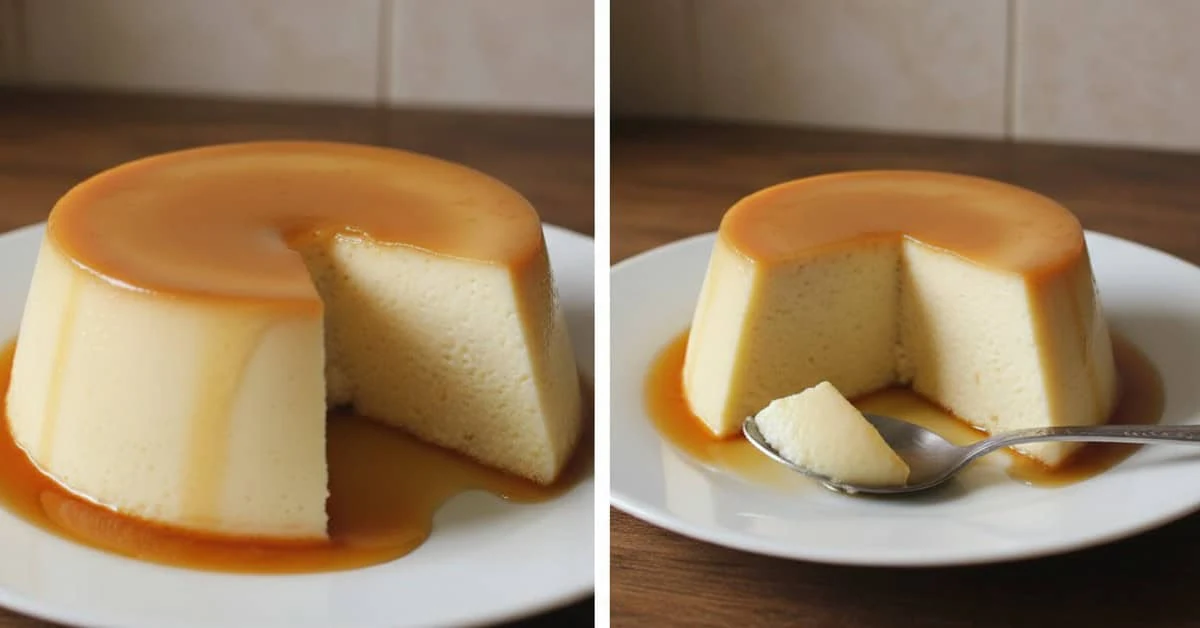
Brazilian condensed milk flan, or pudim de leite, has a smooth custard beneath a glossy caramel topping. Mix gently, strain the custard and bake in a water bath at a low temperature to minimise bubbles, then chill thoroughly before turning it out.
Want a smooth Brazilian condensed milk flan with fewer little holes? These practical steps explain how caramel, gentle mixing and controlled baking work together. The result depends on your oven and tin, so check the custard rather than relying on time alone.
Ingredients for smooth condensed milk flan
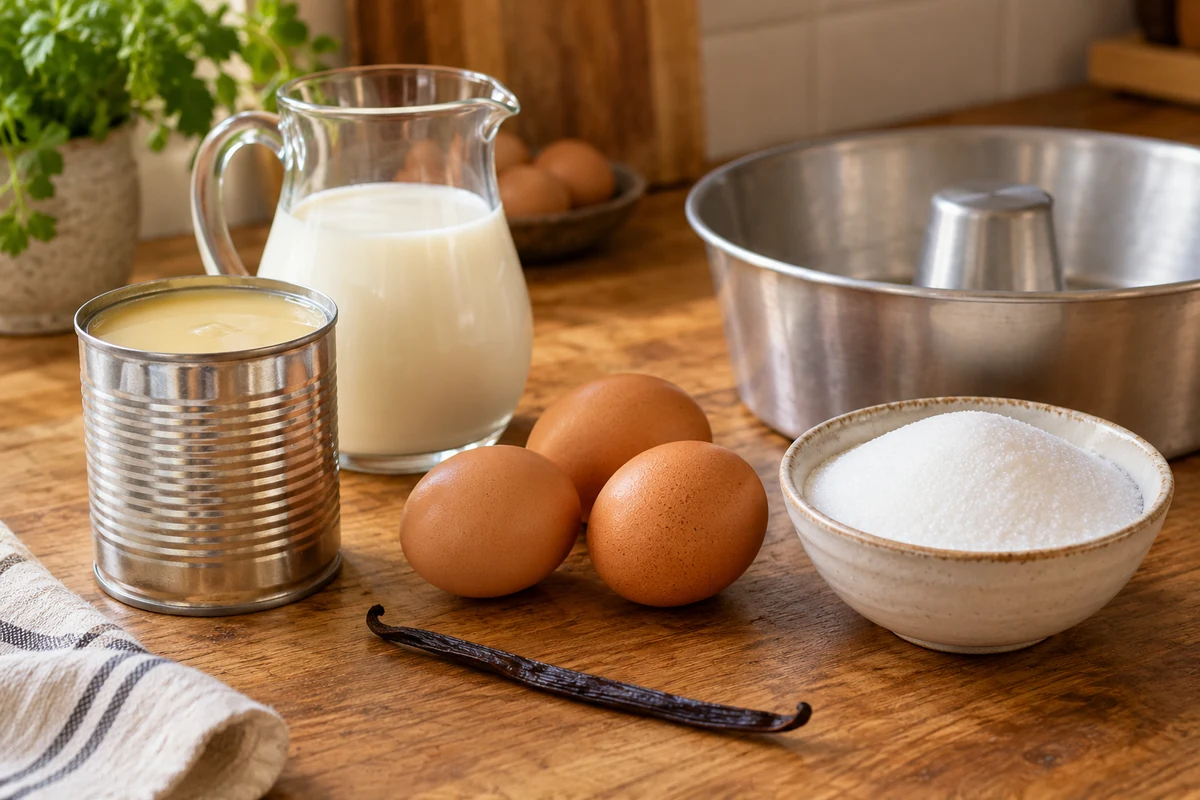
For a smooth condensed milk flan, measure the ingredients before starting. A tin’s weight in grams is not the same as its volume in millilitres, so use a measuring jug for the milk.
- 1 tin full-fat sweetened condensed milk, about 397 g — a 395 g tin also works. Homemade versions vary in concentration and may change the set.
- 300 ml whole milk — measure separately rather than assuming a 395 g condensed milk tin holds 395 ml. Semi-skimmed milk gives a slightly less rich result.
- 3 large eggs — take them out shortly before mixing; plant-based egg substitutes do not behave the same way in this custard.
- 200 g granulated or caster sugar — for the caramel; alternative sugars change its flavour and colour.
- 2 tablespoons water — to moisten the sugar before heating.
- A pinch of salt — to balance the sweetness.
- 1 teaspoon vanilla extract, optional — for a gentle vanilla flavour.
- A little butter for the tin, if needed — usually unnecessary where caramel coats the metal; use only a very thin layer on uncoated areas.
- Hot water for the water bath — enough to reach halfway up the outside of the pudding tin.
Quick ingredient notes and substitutions
- Condensed milk: use sweetened condensed milk, not evaporated milk. A thin homemade version may not set in the same way.
- Milk: whole milk gives the familiar texture. Replacing it with evaporated milk produces a richer variation; keep the measured volume the same.
- Caramel sugar: brown sugar has a different flavour and makes the colour harder to judge. Do not substitute liquid or artificial sweeteners in this caramel method.
- Eggs: use whole eggs without whipping the whites separately. Gentle mixing helps avoid introducing excess air.
- Ingredient temperature: take the eggs out shortly before you start, rather than leaving them out for hours, and avoid vigorous blending.
How to make Brazilian condensed milk flan
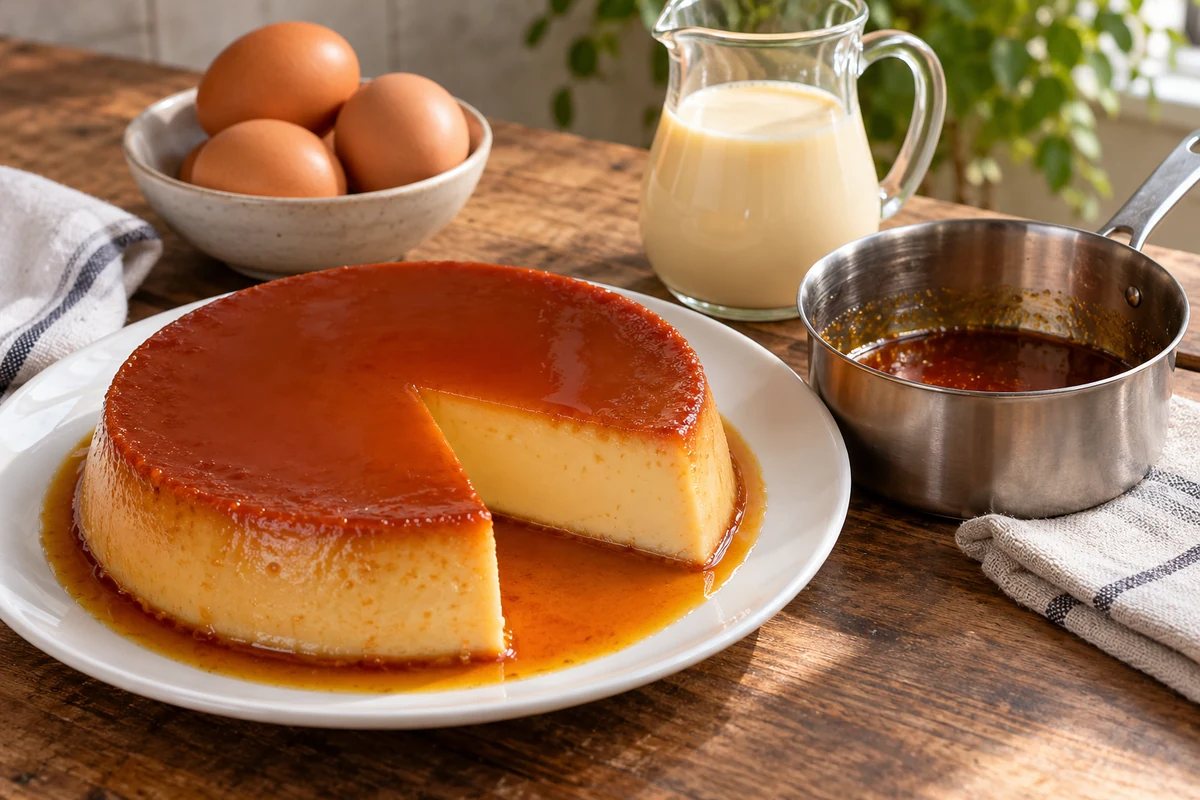
- Make the caramel: put 200 g sugar and 2 tablespoons water in a medium heavy-based saucepan. Heat gently until dissolving, then cook over medium heat to amber. Avoid stirring once it boils; swirl carefully if needed. Hot caramel causes serious burns, so keep hands clear and never taste it hot.
- Coat the tin: carefully pour the caramel into a solid 1.5–2 litre metal pudding or ring tin. Wearing oven gloves, tilt to cover the base and a little of the sides. Set aside to harden. Avoid a loose-bottomed tin, which can leak in the water bath.
- Mix the custard: combine the condensed milk, 300 ml whole milk, 3 eggs, salt and optional vanilla. Blend for about 10–15 seconds, or whisk gently by hand, just until combined without a thick layer of foam.
- Strain: pour through a fine sieve into the caramel-coated tin. Skim off any remaining foam; straining removes egg strands, but does not remove every air bubble.
- Prepare the water bath: place the pudding tin inside a larger roasting tin on the oven shelf. Carefully add hot water to the roasting tin until it reaches halfway up the pudding tin, without splashing water into the custard.
- Bake gently: loosely cover the pudding tin with foil and bake in a preheated oven at 160°C, or 140°C fan. Start checking after about 50 minutes; a medium tin often takes 50–70 minutes, but a deeper tin or cooler oven may need longer.
- Check the set: the edges should be firm and the centre should wobble gently as one mass, not slosh like liquid. For a food-safety check, a clean probe in the centre should reach at least 70°C for 2 minutes, or an equivalent combination such as 75°C for 30 seconds. Do not keep baking until the custard is completely rigid.
- Cool and chill: carefully lift the pudding tin out of the water bath and cool on a rack for about 30–60 minutes. Refrigerate promptly and always within 1–2 hours of cooking. Chill for at least 4 hours, preferably overnight, before turning out.
- Turn out carefully: loosen the edges with a thin knife, then briefly stand the base in warm water for about 10–15 seconds without letting water enter the tin. Place a large rimmed serving plate on top and invert firmly, holding both together.
- Serve and store: serve chilled. Keep covered in the fridge at 5°C or below and eat within 48 hours, or sooner if an ingredient requires it. Return leftovers to the fridge promptly.
Tips for reducing bubbles
Mix briefly, avoid high-speed whisking and strain the custard. Keep the oven gentle and the water bath below a vigorous boil; overheating can make the custard grainy even when it was mixed carefully.
Condensed milk flan variations
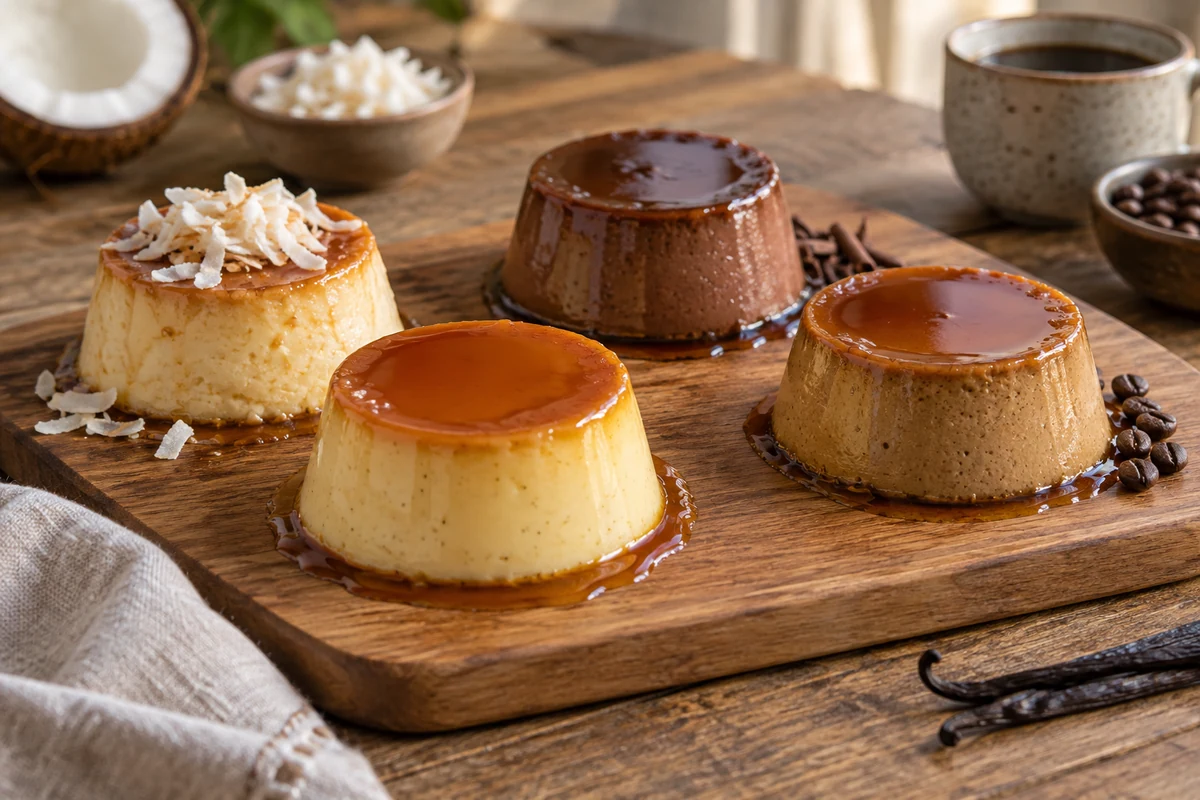
You can vary condensed milk flan while keeping the same gentle baking method. Extra solids and different fats affect texture and baking time, so treat the following as variations rather than identical replacements.
Coconut
A coconut version gives the custard a tropical flavour.
- 150 ml coconut milk plus 150 ml whole milk — together these replace the original 300 ml milk; do not add a whole extra tin.
- A little freshly grated coconut, optional — use as a topping after turning out if you want the custard itself to remain smooth.
- Extra sugar is usually unnecessary — the condensed milk and caramel already provide plenty of sweetness.
Tip: mix gently and strain before baking. Coconut milk may separate, so stir it thoroughly before measuring.
Chocolate
Chocolate makes a denser, more intensely flavoured version.
- 3 tablespoons unsweetened cocoa powder — sift to remove lumps.
- 50 g melted dark chocolate — allow it to cool slightly before adding, so it does not cook the eggs.
- 1 teaspoon instant coffee, optional — for a deeper chocolate flavour.
Method adjustment: blend the cocoa with a little of the measured milk first, then combine with the remaining ingredients. Mix briefly, strain and check the set during baking.
Coffee
A coffee version pairs the sweet custard with a more roasted flavour.
- 2 tablespoons strong espresso, cooled — about 30 ml.
- 1 tablespoon coffee liqueur, optional — about 15 ml; omit for an alcohol-free version. Baking does not guarantee removal of all alcohol.
Keep the liquid balanced: use 270 ml milk with the espresso, or 255 ml milk if also adding the liqueur, so the combined liquid stays at 300 ml.
Cream cheese variation
Cream cheese adds a slightly tangy flavour and a denser, cheesecake-like texture.
- 150 g full-fat cream cheese — soften briefly and mix until smooth before gradually adding the eggs and milks.
- Finely grated lemon zest, optional — for a citrus note.
How to adapt: mix without whipping in excess air and strain if needed. The additional cheese increases the volume, so leave space in the tin and allow for a different baking time.
Reduced-fat ingredient options
Different products change the texture; a reduced-fat label does not necessarily mean less sugar.
- 1 similar-sized tin reduced-fat condensed milk — check the product’s sugar and fat information rather than assuming both are reduced.
- 300 ml semi-skimmed milk — skimmed milk produces a less rich result.
- No extra sweetener is needed — retain ordinary sugar for the caramel, since baking sweeteners do not caramelise in the same way.
The shared technique: mix briefly, strain and bake gently in a hot-water bath. These steps help produce a smoother condensed milk flan, although different ingredients change its final texture.
How to minimise bubbles and get a smooth texture
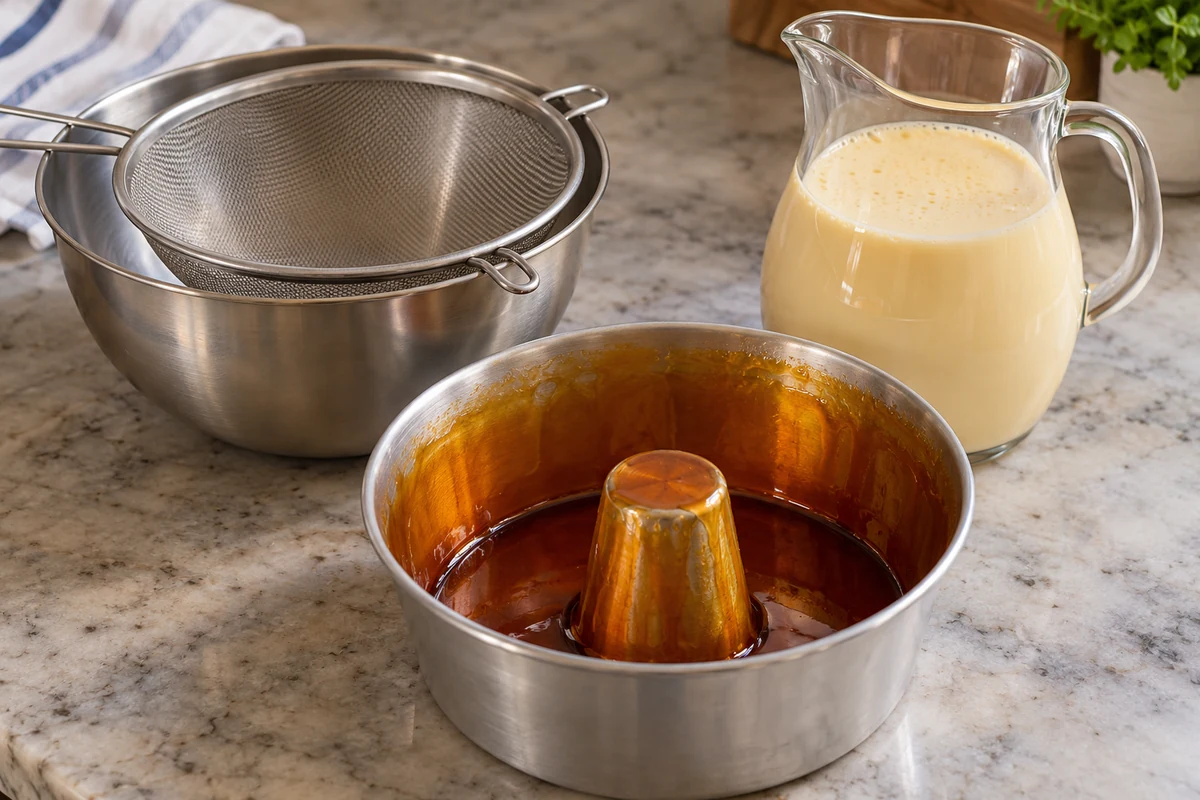
A few careful steps help keep condensed milk flan smooth. Avoid adding unnecessary air and give the custard gentle, even heat.
Essential techniques
- Prepare the eggs shortly beforehand: taking them out around 30 minutes before mixing is enough; do not leave them unrefrigerated for a prolonged period.
- Mix only as much as needed: blend for roughly 10–15 seconds or use a hand whisk gently. A frothy mixture is more likely to leave bubbles.
- Strain and skim: a fine sieve removes egg strands and lumps; skim off visible foam separately.
- Use a hot-water bath: fill the outer roasting tin halfway up the pudding tin for more even cooking.
- Keep the oven gentle: use 160°C conventional or 140°C fan. Excessive heat can overcook the edges and create a pitted texture.
- Avoid repeatedly opening the oven: leave it undisturbed during the early part of baking, then check the set from about 50 minutes onwards.
- Cool promptly: remove the tin from the hot water and cool on a rack, then refrigerate within 1–2 hours. Do not leave it out all evening while waiting for it to become completely cold.
- Release gently: warm the base in water briefly, for about 10–15 seconds, to loosen the caramel before turning out.
A practical sequence for a smoother flan
- Make the caramel, coat the tin and let it harden.
- Mix briefly: combine the condensed milk, measured milk, eggs and flavourings without creating excess foam.
- Strain the custard into the prepared tin and skim off visible bubbles.
- Set up the water bath in the larger roasting tin and loosely cover the pudding tin with foil.
- Bake at 160°C, or 140°C fan until the edges are set and the centre has a gentle, unified wobble rather than liquid movement; check the cooking temperature as described above.
- Remove and cool on a rack for about 30–60 minutes, refrigerating within 1–2 hours, then chill for at least 4 hours or overnight.
A useful distinction: skim foam before baking. Do not press a hot spatula over a cooked custard to erase holes; it can damage the surface and will not correct its internal texture.
Storage, serving and common problems
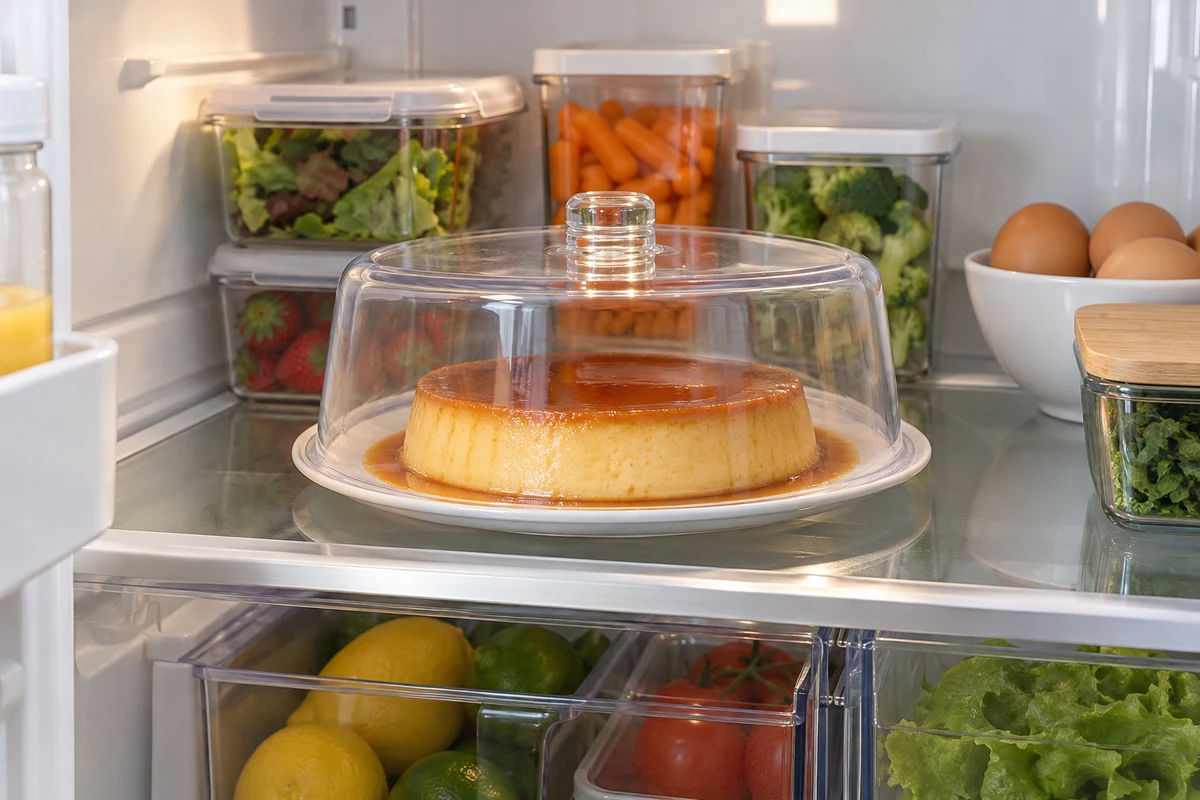
Good storage protects both the custard and its texture. Cool it promptly outside the water bath, then refrigerate within 1–2 hours rather than waiting indefinitely for it to become cold.
- Chill after a short cooling period: about 30–60 minutes on a rack is usually enough to reduce the initial heat before refrigeration; keep within the overall 1–2 hour limit.
- Cover appropriately: cover the chilled tin or use a lidded container to keep the custard from drying out or absorbing fridge odours.
- Refrigerated storage: keep at 5°C or below and eat within 48 hours, following any shorter ingredient use-by date.
- Freezing, if needed: wrap portions well and freeze promptly for up to a month as a quality guide. Custard may become watery or grainy, so refrigeration gives a better texture. Defrost in the fridge and use within 24 hours of complete thawing.
- Keep serving time brief: return the dessert to the fridge promptly and do not leave it at room temperature for more than 2 hours.
How to serve
- Chill thoroughly: allow at least 4 hours, preferably overnight, before unmoulding and serving.
- Loosen the edges: run a thin knife carefully around the outside and central ring, if present.
- Warm the base in a little warm water for about 10–15 seconds to release the caramel, keeping water out of the custard.
- Invert carefully: use a rimmed plate larger than the tin and hold both firmly together as you turn them over.
- Cut neat slices: warm a knife in water, wipe it dry and clean it between slices.
- Finish simply: spoon over the caramel and add fresh fruit or whipped cream if you like.
Common problems and what to do
- Lots of little holes: excessive air or overly hot baking can cause these. Next time, mix less, skim foam and keep the water bath at a gentle heat.
- Custard still liquid: while it is baking, allow more time and check the set and temperature. Incorrect liquid ratios can also prevent setting; do not serve an undercooked custard simply because it has been chilled.
- Bitter, burnt caramel: let it cool safely, discard it and start again in a clean pan. Watch closely as the colour changes from gold to amber.
- Cracked surface: overbaking can be a cause. Use gentler heat and remove the pudding once set; do not extend room-temperature cooling beyond the safe limit to try to prevent cracks.
- Breaking on release: chill thoroughly, loosen the edges and briefly warm the base. A fully cooked, safely chilled flan that breaks can still be served in individual dishes.
Practical reminder: careful measuring, gentle heat and prompt chilling all help make condensed milk flan a good make-ahead dessert.
A smooth caramel dessert for the table
Amber caramel, brief mixing, straining and a gentle water bath give your condensed milk flan the best chance of a smooth, creamy finish.
Thank you for following the recipe. Follow our social channels for more festive ideas, food photographs and variations to try at home.
Visit the I Love Christmas blog for seasonal inspiration and more recipes. Happy cooking!
FAQ: smooth Brazilian condensed milk flan
How do I avoid little holes in the custard?
Mix briefly, strain and skim off foam, then bake gently in a water bath at 160°C conventional or 140°C fan. Both excess air and overheating can cause holes; avoid a vigorously boiling water bath.
Can I replace the whole milk?
Semi-skimmed milk gives a slightly less rich result, while evaporated milk makes a richer variation. For coconut flan, use 150 ml whole milk and 150 ml coconut milk in place of the original 300 ml. Other substitutions may change the set.
How long does it bake, and how do I check it?
Start checking after about 50 minutes at 160°C conventional or 140°C fan; 50–70 minutes is a guide, not a guarantee. The edges should be firm and the centre should wobble as one mass, not remain liquid. A clean probe should confirm at least 70°C for 2 minutes or an equivalent safe combination.
How should I store the flan?
Remove it from the water bath, cool briefly on a rack and refrigerate within 1–2 hours. Keep covered at 5°C or below and eat within 48 hours. Freezing may affect its texture; thaw in the fridge and use within 24 hours of complete defrosting.
What if the caramel burns?
Do not use burnt caramel. Allow it to cool safely, discard it and start again in a clean pan. Watch for an amber colour, remove from the heat promptly and never taste hot caramel.
Sources and Further Reading
- Food Standards Agency: chilling, freezing and defrosting food safely
- Food Standards Agency: cooking food safely