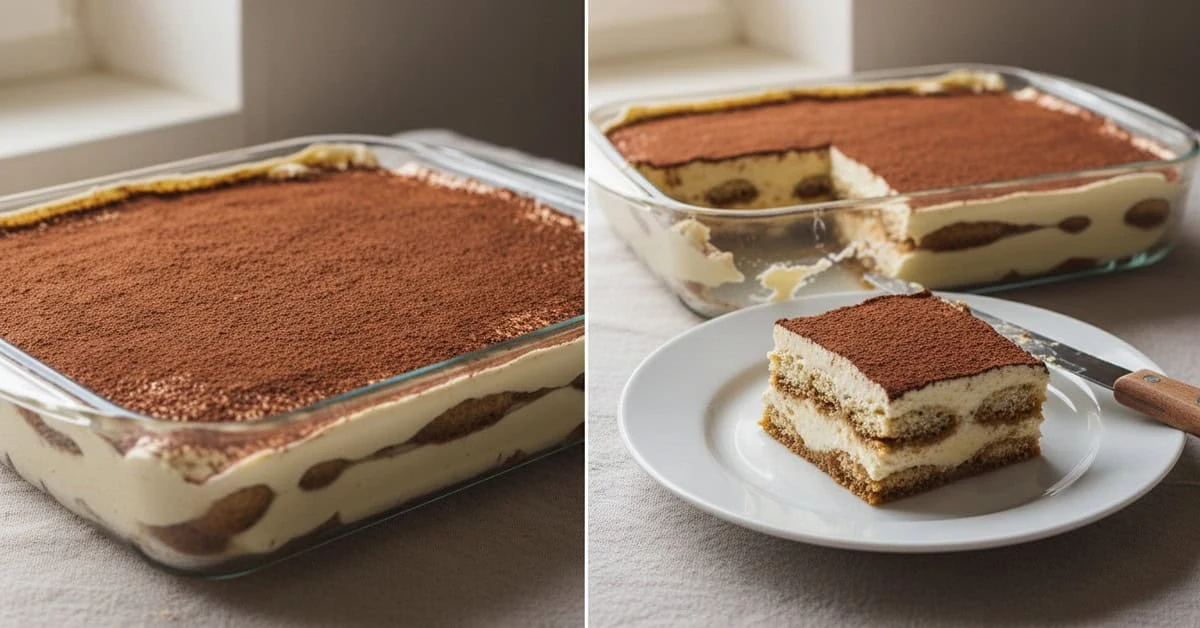
Christmas tiramisu layers briefly dipped sponge fingers with a light mascarpone cream, finished with cocoa and optional orange zest. This version uses pasteurised egg products suitable for uncooked dishes. Allow several hours for chilling and keep the dessert refrigerated until serving.
This Christmas tiramisu combines bold coffee with a soft mascarpone filling. It is a make-ahead dessert with room for a little orange zest or spice, while keeping the familiar combination of sponge fingers, cream and cocoa.
Ingredients for Christmas tiramisu
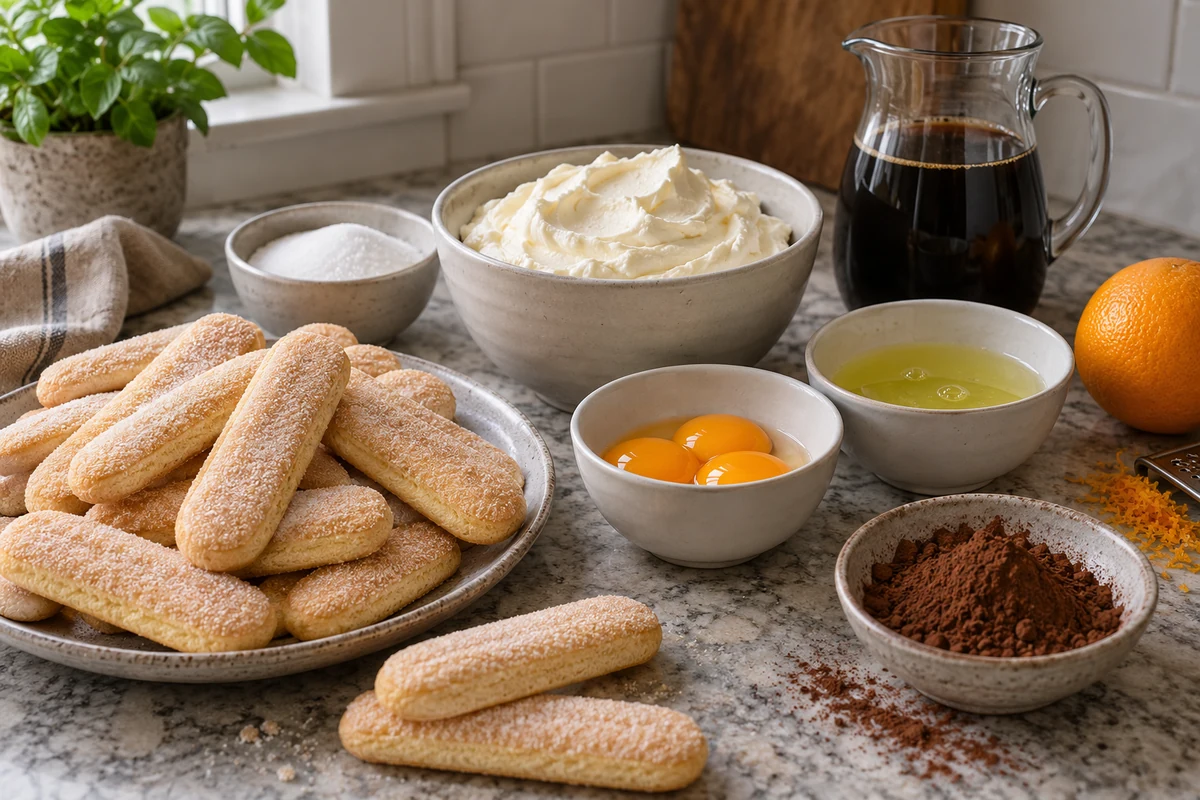
For this Christmas tiramisu, prepare the following ingredients and a serving dish of roughly 20 cm square:
- 300 g mascarpone – cream cheese mixed with a little double cream is an alternative, but produces a tangier, less traditional filling.
- Pasteurised yolks and whites equivalent to 3 large eggs – approximately 55–60 g yolk and 100–110 g white. Follow the product’s egg-equivalent measures and choose whites suitable for whipping and products suitable for uncooked use.
- 80 g caster sugar – for the mascarpone filling.
- 200 g savoiardi or sponge fingers – firm sponge cake strips can be used, but absorb liquid differently.
- 300 ml strong coffee, cooled – use decaffeinated coffee if preferred. Ordinary black tea also contains caffeine.
- 2–3 tablespoons Marsala, rum or amaretto, optional – for an alcohol-free version, omit it or replace with extra coffee; do not substitute tablespoons of vanilla extract.
- 2 tablespoons cocoa powder – for dusting before serving.
- Finely grated zest of 1 small orange, optional – or 1 teaspoon vanilla extract. Use an alcohol-free vanilla flavouring if strict alcohol avoidance is needed.
- A pinch of salt – for the mascarpone mixture.
- Grated dark chocolate, optional – for decoration.
Ingredient notes and alternatives
Mascarpone: if unavailable, start with 300 g firm full-fat cream cheese and mix in double cream a little at a time, up to about 60 ml, only until smooth. The flavour and firmness will differ.
Coffee: brew it strongly and cool completely before dipping. Decaffeinated coffee has much less caffeine, but is not necessarily caffeine-free. The berry variation below avoids coffee altogether.
Eggs: use pasteurised products suitable for uncooked desserts. Replacing only the whites with 100 ml whipped double cream still leaves yolks in the recipe; it does not make the dessert egg-free or remove raw yolks.
Sponge fingers: dip briefly and lift out at once. Brands differ, so test one rather than soaking every biscuit for a fixed time.
How to make Christmas tiramisu
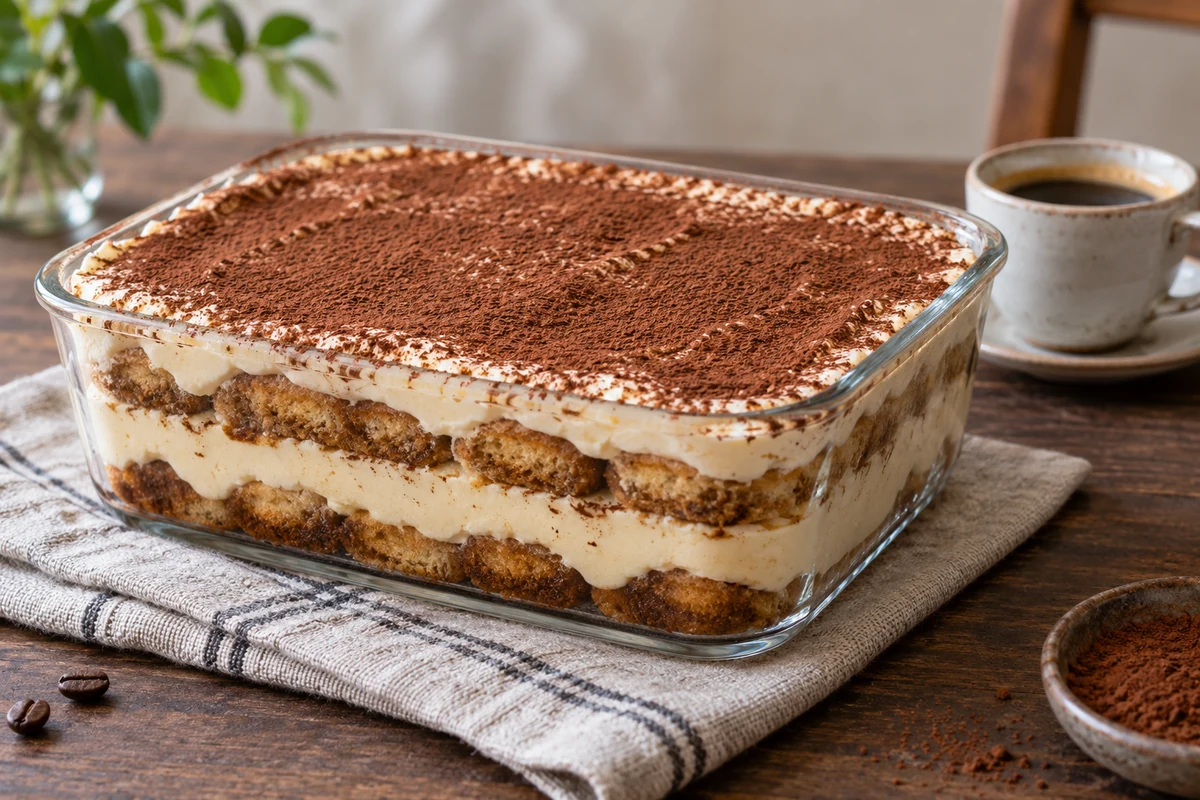
Follow these steps for a light, chilled Christmas tiramisu. Have the coffee cooled and the equipment ready before opening the egg products.
- Measure the egg products: place the pasteurised yolks and whites in separate clean bowls. Keep them chilled until needed and follow the manufacturer’s handling instructions.
- Whisk the yolks and sugar: beat the yolks with 80 g caster sugar until pale and thick enough to fall in a ribbon. This whisking step does not cook the eggs.
- Add mascarpone: gently mix 300 g mascarpone into the yolk mixture until smooth. Add the pinch of salt and optional orange zest or vanilla. Avoid excessive beating, which can split the cheese.
- Whisk the whites: use a clean, grease-free bowl and beat the pasteurised whites to firm, glossy peaks, following the product’s instructions. Alternatively, use 100 ml double cream whipped to soft peaks for a different texture; retain pasteurised yolks.
- Fold together: mix one-third of the whisked whites into the mascarpone to loosen it, then gently fold in the rest without knocking out all the air.
- Prepare the dipping liquid: pour the 300 ml cooled coffee into a shallow bowl. Add 2–3 tablespoons Marsala, rum or amaretto if using. The alcohol is not cooked off in this dessert.
- Dip briefly: turn each sponge finger quickly in the cold coffee, starting with about a second in total and adjusting to the biscuit. It should retain its shape, not become saturated.
- Make the first layer: arrange dipped sponge fingers across the base of the dish, trimming a few to fill large gaps.
- Add cream: spread half the mascarpone mixture gently over the biscuits.
- Repeat: add a second layer of dipped biscuits and finish with the remaining mascarpone cream, smoothing the top.
- Chill thoroughly: cover and refrigerate at 5°C or below for at least 4–6 hours, preferably overnight, so the layers settle.
- Finish before serving: sift cocoa over the top and add optional dark chocolate shavings or orange zest. Use only clean edible decorations, keeping decorative greenery away from the food.
- Storage: keep refrigerated and eat within 48 hours of preparation, or sooner if an ingredient’s instructions require it. For the best texture, avoid freezing.
Layering without soaking the biscuits
Christmas tiramisu variations

These Christmas tiramisu variations add different flavours. Check ingredients carefully for guests’ dietary needs; changes to the filling can also change how firmly it sets.
Chocolate and spice
For a richer version, try a small amount of cooled ganache and a little spice. Do not add hot ganache to the mascarpone mixture.
- Replace the 300 g mascarpone with 250 g mascarpone and 50 g cooled, soft dark chocolate ganache. This is a variation to trial, as ganache recipes differ.
- 30–50 g grated dark chocolate – fold a little into the filling or scatter over the top.
- ½ teaspoon cinnamon and a pinch of nutmeg – add to the filling for a spiced version.
Mixed berries without coffee
Use a cooled berry sauce instead of coffee for a fruit-based variation. Keep the mascarpone and pasteurised-egg guidance unchanged unless following a separate egg-free recipe.
- 200 g berries – simmer with 50 g sugar and 2 tablespoons water until juicy. If using frozen berries, follow the packet’s cooking instructions. Cool promptly and chill before assembly.
- Instead of coffee: strain or blend the sauce if needed and moisten the biscuits lightly. You may need a little cooled water to make a dipping consistency; do not pour all the sauce over the biscuits.
- Decoration: add washed fresh berries, edible mint and a little lemon zest just before serving.
Dairy-free and vegan adaptations
A vegan version needs to replace both the mascarpone and all the eggs, and use egg-free biscuits. Dairy-free does not mean suitable for every allergy: nut-based creams contain nuts.
- Use a thick plant-based dessert cream, such as a cashew-based cream, in a recipe formulated for vegan tiramisu. Soaking 150 g cashews and adding 60–80 ml water does not reliably make an equivalent 300 g mascarpone replacement.
- Whipped aquafaba can lighten a vegan filling, but its strength varies. Use a tested vegan recipe for the full cream, sugar and aquafaba balance rather than replacing only the egg whites here and leaving in the yolks.
- Biscuits: choose vegan sponge fingers or a suitable egg-free sponge. A biscuit labelled dairy-free may still contain egg.
- Coffee: use decaffeinated coffee if desired. Ordinary black tea is not a caffeine-free alternative.
A festive touch of alcohol and citrus
Orange zest and a small amount of Marsala or another suitable drink make a fragrant variation. For an alcohol-free dessert, leave the drink out entirely; chilling does not remove alcohol.
- 2–3 tablespoons Marsala, rum or amaretto – stir into the cold coffee before dipping.
- Zest of 1 orange – fold into the mascarpone cream, avoiding the bitter white pith.
- Without alcohol: use extra coffee instead of the alcoholic drink. Add up to 1 teaspoon alcohol-free vanilla flavouring if wanted, checking the label.
Individual tiramisu glasses
Small glasses make serving easier and keep portions tidy. Layer broken sponge fingers and cream without packing the biscuits too tightly.
- Approximate yield: 6–8 portions, depending on the glasses. Dip biscuits only as needed; the 300 ml coffee is a dipping supply, not an amount that must all go into the dessert.
- Decoration: finish with cocoa, chocolate shavings, raspberries or a small biscuit. Check additional biscuits for allergens.
- Assembly tip: a thin layer of cream at the bottom of each glass helps position the biscuit pieces. Finish with cream for an even surface.
Adapting the recipe carefully
Balance: ingredient swaps affect both liquid content and structure; test a small portion first. Temperature: use cold coffee and keep perishable ingredients chilled between steps. Time: allow at least 4–6 hours in the fridge, preferably overnight.
Assembly, storage and serving tips
Layering the dessert
- Prepare the dish: use a clean, dry serving dish or individual glasses.
- Moisten the biscuits: dip quickly in cold coffee and lift out immediately. Stop before they soften so much that they break apart.
- Arrange evenly: place the sponge fingers side by side to cover the base.
- Spread the cream gently: add half the mascarpone mixture without pressing down hard on the biscuits.
- Repeat the layers: add another layer of briefly dipped sponge fingers and finish with the remaining cream, smoothing the top gently.
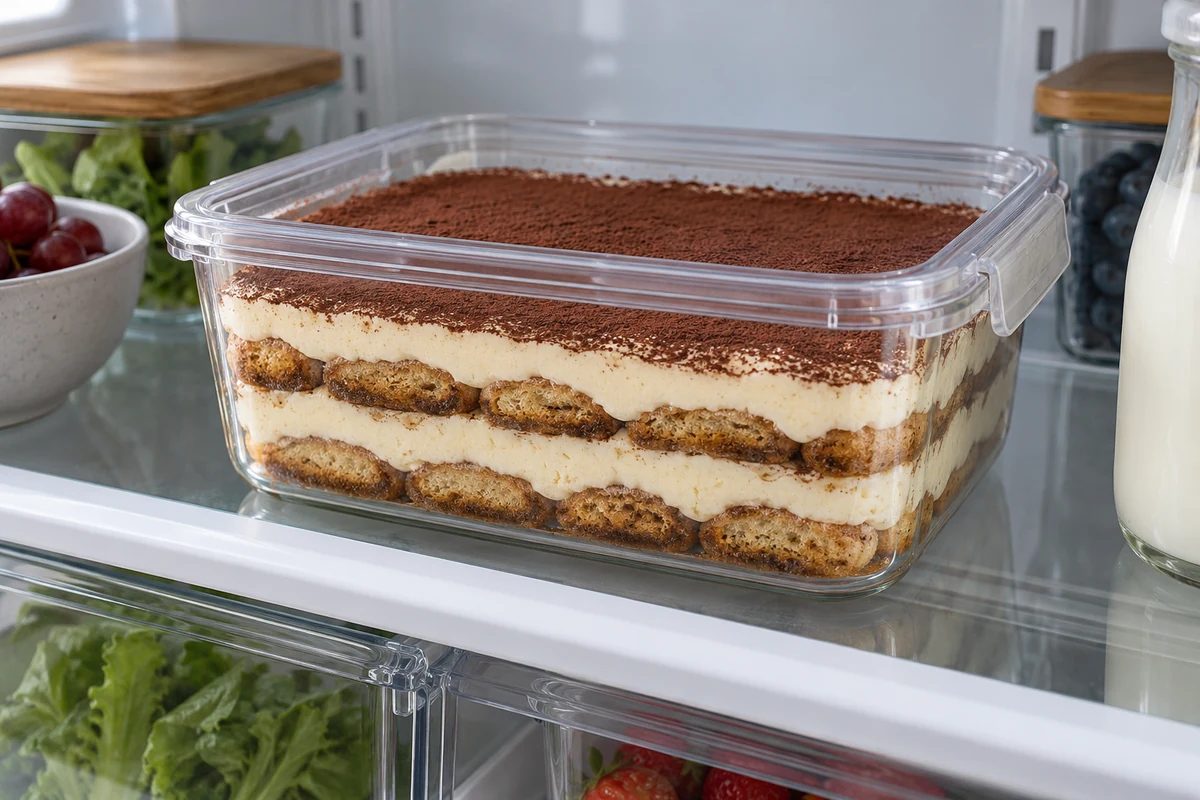
- Cover before chilling: use a lid or cling film held clear of the surface to avoid marking the cream.
Keeping tiramisu chilled
- Refrigeration: keep at 5°C or below. Chill for at least 4–6 hours; 8–12 hours often gives a more settled texture.
- Use promptly: eat within 48 hours of preparation, subject to ingredient instructions. This is a storage limit, not merely a preference for texture.
- Keep covered: protect the dessert from other food, fridge odours and drying.
- Transport cold: use a closed container in an insulated cool bag with frozen gel packs and refrigerate on arrival.
- Freezing affects quality: mascarpone cream can separate and biscuits become softer. If you freeze it, do so promptly, thaw in the fridge and eat within 24 hours of fully defrosting.
- Food safety: serve small portions and return the rest to the fridge promptly, avoiding more than 2 hours at room temperature in total. Eating untreated raw eggs more quickly does not remove their risk; use the pasteurised products specified here.
Serving
- Dust just before serving: sift cocoa over the top so it looks fresh rather than damp.
- Portion neatly: use a clean, warm, dry knife or serving spoon, wiping between portions. Individual glasses avoid the need to cut slices.
- Decorate simply: use orange zest, dark chocolate shavings or fresh berries. Keep non-edible festive decorations off the food.
- Accompaniments: offer espresso, decaffeinated coffee or tea. Any alcoholic accompaniment should be served separately and clearly identified.
- Serve chilled: take out the required portions shortly before serving rather than leaving the whole dish on a warm table.
Planning ahead
Texture: use only lightly moistened biscuits and retain air in the cream. Timing: making tiramisu the evening before gives the layers time to settle while leaving it within the 48-hour storage window.
A little tiramisu history
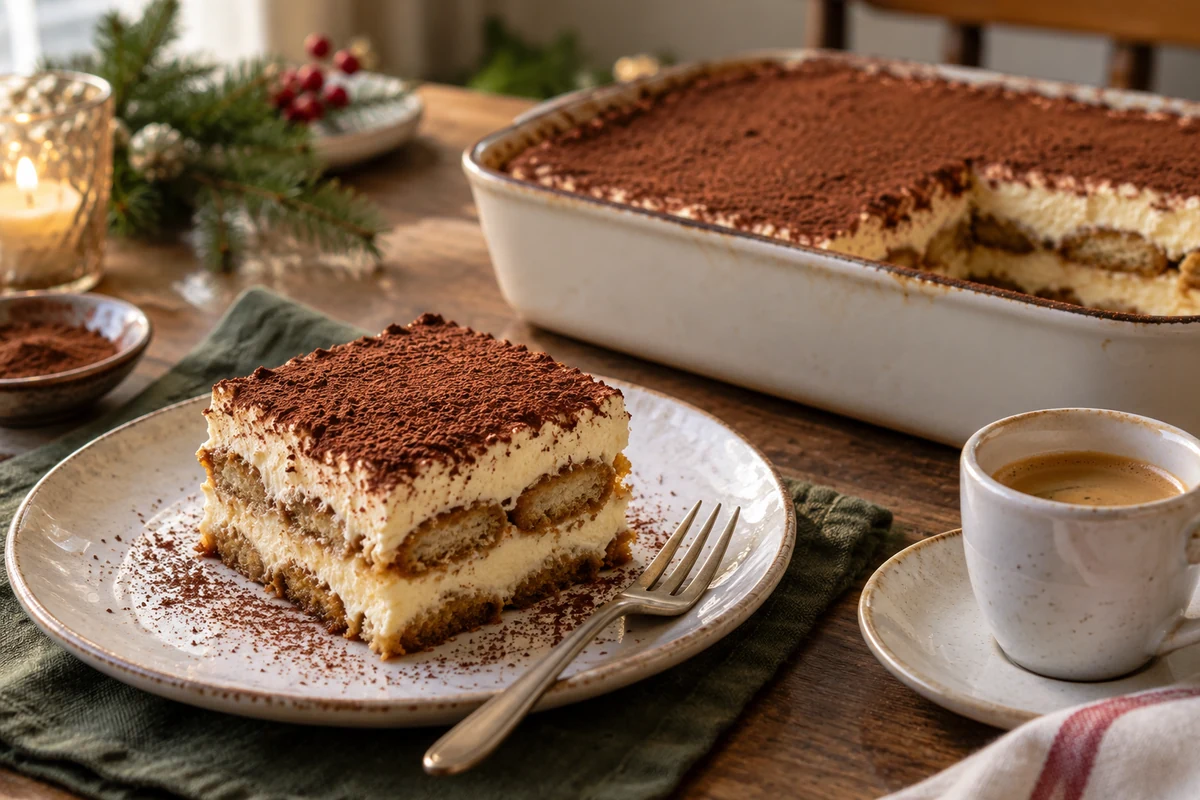
The Italian name tiramisu is commonly translated as ‘pick me up’. Coffee is a defining flavour, although the name is not a nutritional or health claim.
Origins and development
Tiramisu’s origins are debated. One well-known account comes from Le Beccherie in Treviso, which records the dessert appearing on its menu in 1972 after work by Alba Campeol and pastry chef Roberto Linguanotto. This festive recipe is an adaptation, not a claim to reproduce that restaurant’s original exactly.
Familiar ingredients include mascarpone, eggs, coffee, sponge fingers, sugar and cocoa. Later adaptations use different drinks, fruit or chocolate.
Useful points of interest
- The name: ‘pick me up’ is a useful English rendering of tiramisu, a name associated with its rich coffee flavour.
- Restaurant history: Le Beccherie’s published account places its version on the menu in 1972. Other origin stories exist, so a single undisputed invention date would be misleading.
- Mascarpone: this rich Italian cream cheese gives the filling a mild flavour and soft texture.
- Egg methods vary: recipes may use yolks alone, yolks and whites, or cooked egg mixtures. Here, pasteurised egg products are specified. Replacing whites with cream does not address untreated raw yolks.
- Modern variations: wine, liqueurs and fruit create different versions, but they should be described as adaptations rather than all being the same traditional recipe.
Giving tiramisu a Christmas touch
Orange zest, a little cinnamon or nutmeg, and optional Marsala make this version feel festive. Berry toppings and individual glasses are serving ideas, rather than evidence of a separate historical Christmas tradition.
Texture and serving time
Allow time to settle: several hours in the fridge help the layers hold together. Serve cold: keep refrigerated, add cocoa at the last moment and use within the stated storage period.
A make-ahead Christmas dessert
This Christmas tiramisu with coffee and mascarpone brings together familiar flavours in a dessert you can prepare ahead. Brief dipping, gentle folding and proper chilling are more useful than trying to rush the setting time.
Choose pasteurised egg products suitable for uncooked use, chill for at least 4–6 hours and keep any variations clearly identified. For vegan or fully egg-free versions, use a complete recipe designed around those requirements.
Follow us on social media and share your festive desserts. Visit the I Love Christmas blog for more seasonal recipes and serving ideas.
Christmas tiramisu: frequently asked questions
Can I make tiramisu ahead?
Yes. Make it the day before, chill overnight at 5°C or below and eat within 48 hours of preparation, or sooner if the ingredients require it.
How can I avoid untreated raw eggs?
Use pasteurised yolks and whites suitable for uncooked desserts, with whites labelled as suitable for whipping. Replacing whites with whipped cream leaves the yolks unchanged. For an egg-free dessert, use a complete egg-free recipe and check the biscuits too.
How do I stop tiramisu becoming soggy?
Dip the sponge fingers very briefly in cold coffee and remove immediately. Test one first, as absorption varies. Do not pour leftover dipping coffee into the dish.
Can I freeze tiramisu?
It is best freshly chilled because freezing can change the cream and biscuit texture. If freezing, do so promptly without the cocoa topping, thaw in the fridge and eat within 24 hours of fully defrosting.
How do dairy-free and vegan versions differ?
Dairy-free versions replace mascarpone and any cream but may still contain eggs. Vegan versions must also replace every egg component and use vegan biscuits. Cashew cream introduces a nut allergen, and ordinary dairy-free sponge fingers may still contain egg.
Sources and Further Reading
- Food Standards Agency: chilling, freezing and defrosting food safely
- Food Standards Agency: safe storage, handling and use of eggs
- Le Beccherie: the restaurant’s account of tiramisu