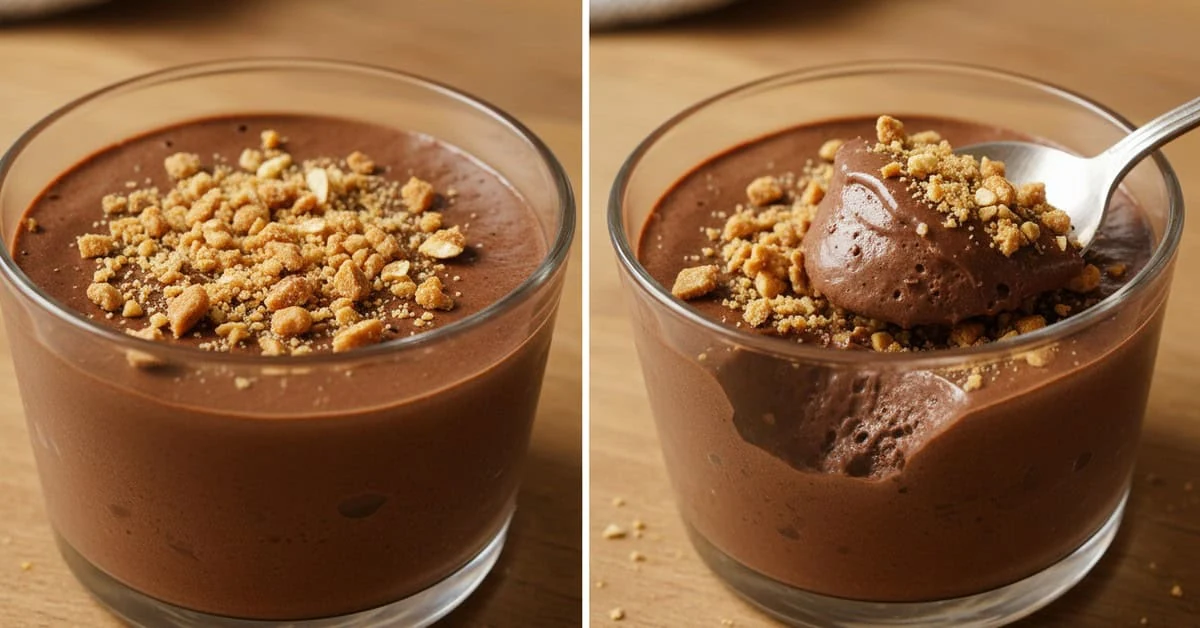
Christmas chocolate mousse combines dark chocolate, whipped cream and whisked pasteurised egg whites for an airy texture. Chill it until set, then add the nut praline just before serving. The recipe includes ingredient notes, storage guidance and suggestions for dietary adaptations.
This Christmas chocolate mousse pairs a soft, airy filling with crunchy caramel-coated nuts. Gentle folding keeps the mousse light, while adding the topping at the last moment protects its crisp texture.
Ingredients for chocolate mousse with nut praline
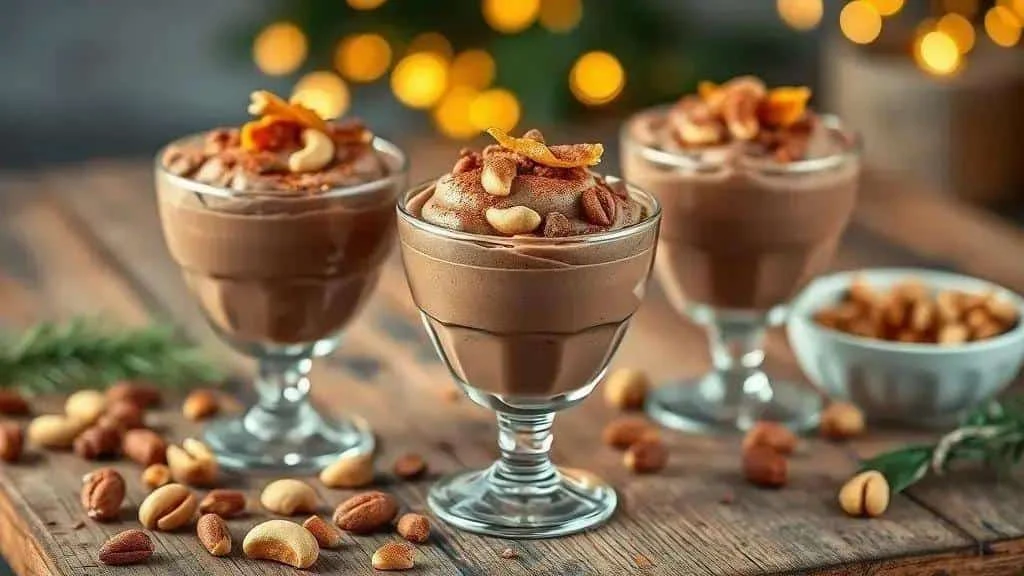
For the chocolate mousse with crunchy nut praline, prepare the following ingredients:
- 200 g dark chocolate, chopped – around 50–70% cocoa solids gives a balanced flavour. Milk chocolate changes the sweetness and setting texture rather than making an identical substitute.
- Pasteurised yolks and whites equivalent to 4 large eggs – approximately 75–80 g yolk and 135–145 g white, following the product’s egg-equivalent measures. Choose products suitable for uncooked dishes and whites suitable for whipping.
- 100 g caster sugar – for the mousse. Sweeteners and coconut sugar affect texture and should be trialled separately.
- 300 ml double cream, well chilled – ordinary single cream will not whip to the same structure.
- 1 teaspoon vanilla extract – or a little finely grated orange zest for a festive flavour.
- A pinch of salt – to balance the chocolate.
- No gelatine is needed for the main recipe, which is served in glasses. If you want a moulded mousse, use a recipe with a specified setting agent and strength: one gelatine leaf is not equivalent to a 6–10 g sachet, and agar is not a direct swap.
- 150 g mixed unsalted nuts, roughly chopped – for example, Brazil nuts and cashews, or a mixture of nuts you enjoy.
- 50 g caster sugar for the topping – this makes lightly caramel-coated nuts rather than a large sheet of brittle. Honey and agave do not produce the same hard caramel.
- 20 g unsalted butter – for the nut topping. A suitable plant-based block can be trialled for a dairy-free adaptation.
- Cocoa powder, optional – for dusting before serving.
- Orange zest or 1 tablespoon rum, brandy or orange liqueur, optional – for flavour. The alcohol is not cooked off in this mousse.
Ingredient and technique notes
Chocolate choice: 50–70% cocoa solids is a useful starting range. Higher percentages give a stronger, less sweet flavour and can make the mousse firmer.
Whisk the whites carefully: aim for firm, glossy peaks, not a dry, clumpy foam. Fold them in gently to retain air.
Crunchy topping: melt the sugar to amber, carefully add the nuts and butter off the heat, then spread on lined, heatproof equipment. Cool completely before breaking into small pieces.
Vegan adaptation: all eggs, cream, chocolate containing milk and butter must be addressed. Replacing only the whites with aquafaba leaves yolks in the recipe; use a complete vegan mousse method rather than that partial swap.
Storage: cover and refrigerate at 5°C or below, eating within 48 hours of preparation or sooner if an ingredient requires it. Keep the praline separate until serving.
How to make chocolate mousse with nut praline
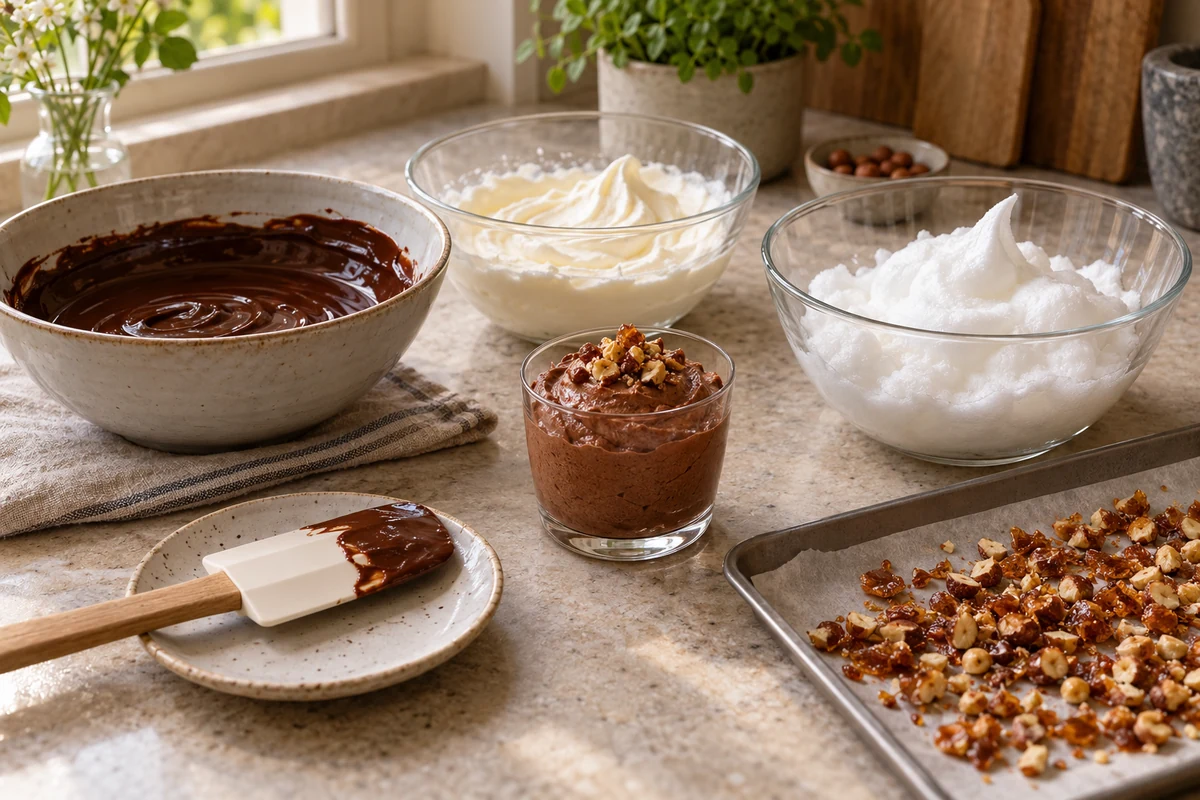
Allow approximately 40–50 minutes of preparation plus at least 3–4 hours of chilling. The mixture makes about 6 generous or 8 smaller portions, depending on the glasses.
- Melt the chocolate: place 200 g chopped dark chocolate in a heatproof bowl over gently simmering water, keeping the bowl clear of the water. Stir until smooth, then leave to cool until lukewarm but still fluid.
- Measure the egg products: place the pasteurised yolks and whites in separate clean bowls. Keep chilled until needed and follow the product’s handling instructions.
- Whisk the whites: use a grease-free bowl and whisk the pasteurised whites to firm, glossy peaks. Keep chilled briefly while preparing the other components.
- Whisk yolks and sugar: beat the pasteurised yolks with 100 g caster sugar until pale and thick. Whisking does not cook the eggs.
- Combine with chocolate: gradually stir the lukewarm, fluid chocolate into the yolk mixture until smooth. Add the pinch of salt. Do not add unmeasured gelatine or assume the warm chocolate pasteurises untreated eggs.
- Whip the cream: whisk 300 ml cold double cream to soft peaks. Stop before it becomes stiff and grainy.
- Fold in the cream: first stir a spoonful into the chocolate mixture to loosen it, then gently fold in the rest in two additions.
- Fold in the whites: add in two stages, using broad, gentle movements until no large white streaks remain.
- Flavour lightly: fold in the vanilla or a little orange zest. If using alcohol, mix 1 tablespoon into the yolk-and-chocolate mixture before folding in the cream, rather than pouring it over the foam.
- Portion and chill: spoon into glasses or a serving bowl, cover and refrigerate for at least 3–4 hours, until set. A large bowl may need longer.
- Make the nut topping: melt 50 g sugar over moderate heat until amber. Remove from the heat and carefully stir in 150 g chopped nuts and 20 g butter; it may bubble. Spread on a parchment-lined heatproof tray with a heatproof utensil. Let it cool fully before breaking up. Never touch or taste hot caramel.
- Finish and serve: add the cooled crunchy nuts just before serving. Dust with cocoa and add a little orange zest if desired; identify any portions containing alcohol.
Tips for a light texture
- Keep the whites grease-free: even a little yolk or fat can interfere with whisking. Choose pasteurised whites labelled as suitable for whipping.
- Check the chocolate temperature: it should be lukewarm and fluid, not hot enough to melt the whipped cream or so cold that it forms lumps.
- Fold rather than beat: cut down through the mixture with a spatula, lift from underneath and turn the bowl. Stop when combined.
- Handle caramel carefully: keep children clear of the pan, use heatproof equipment and take the sugar off the heat as it turns amber. Allow it to cool completely before handling.
- For a vegan mousse: follow a method formulated without any eggs, using vegan chocolate and suitable plant-based ingredients. Aquafaba, coconut cream and agar each behave differently from the ingredients here.
- Store separately: refrigerate the covered mousse at 5°C or below for no more than 48 hours, subject to ingredient instructions. Keep the dry praline airtight and add only when serving.
Chocolate mousse variations: vegan options, less added sugar and alcohol

Adaptations to chocolate mousse with crunchy nut praline need to account for both dietary suitability and the structure of the filling.
Vegan options
Use the following ingredient ideas with a complete vegan mousse recipe. They are not a guaranteed replacement formula for the egg-based method above:
- Vegan dark chocolate – check the ingredients and any relevant allergen warnings, even with a high cocoa percentage.
- Whipped aquafaba – can provide air in an egg-free recipe, but its strength varies and it does not replace the function of yolks by itself.
- Whippable coconut or plant-based cream – chill and use according to the label. Ordinary coconut milk may not whip.
- Setting agents – agar needs heat to activate and can give a firm, jelly-like texture. Do not add an arbitrary 5 g to a cold mousse; follow a recipe formulated for it.
- Nut topping – choose a vegan praline method or use toasted nuts. Replace the butter too, not only the chocolate and cream.
General mixing principles:
- Whisk aquafaba as directed in your chosen vegan recipe, using a clean, grease-free bowl.
- Let melted chocolate cool to the temperature specified before combining it with the plant-based cream; too hot can melt the foam, while too cold can form lumps.
- Fold the aerated components together gently, preserving as much air as possible.
- Chill until set and add the vegan crunchy topping only when serving.
Using less added sugar
The simplest change is to replace caramel-coated nuts with plain toasted nuts. Reducing sugar in the mousse itself changes texture as well as sweetness.
- No-added-sugar chocolate can be considered in a recipe designed for it. It may contain sweeteners and naturally occurring sugars, so the finished dessert is not automatically sugar-free.
- Sweetener quantities vary – follow the product’s instructions for cold desserts instead of assuming 80–100 g is appropriate. Some products have a cooling sensation or can recrystallise.
- Keep the whippable cream if retaining the main method. A low-fat cream will not necessarily hold air in the same way.
- 150 g toasted nuts – use without caramel, with a tiny pinch of salt if desired.
Practical notes:
- Plain toasted nuts provide crunch without the additional sugar used in the caramel topping.
- Test sweeteners in a small portion and check the finished texture after chilling before adapting a whole batch.
With a little alcohol
For those who want it, a small amount of rum, brandy or orange liqueur adds aroma. It remains alcoholic because this dessert is not cooked after the addition.
- Start with 1 tablespoon of the chosen drink. Larger amounts can loosen the mousse; test before adding a second tablespoon.
- Adjust sweetness cautiously if the drink is sweet, keeping other changes small so you can assess the result.
- Use the nut topping from the main recipe, or a suitable ready-made praline, checking ingredients and allergens.
When to add it:
- Mix the drink into the yolk-and-chocolate base while it is lukewarm, before folding in cream and whites.
- Avoid pouring alcohol directly into the whisked whites, which can disturb the foam.
- For an alcohol-free version, use orange zest or a flavouring specifically labelled alcohol-free, in the amount stated on the bottle.
Other flavour ideas
- Citrus: finely grated orange zest complements dark chocolate and gives a festive aroma.
- Extra crunch: mix about 20 g crisp biscuit crumbs into the cold nut topping just before serving. Check additional allergens.
- Smaller portions: use small glasses if you want a less substantial dessert. Simply replacing double cream with low-fat cream can prevent the mousse setting properly and does not justify calling it a low-calorie recipe.
Serving chocolate mousse at Christmas

Serve chocolate mousse with crunchy nut praline cold, adding the dry topping at the last moment for the clearest contrast in texture.
Assembling individual glasses
Clear glasses or small bowls make portions easy to serve and show the mousse beneath the crunchy topping.
- Leave headroom: fill glasses about three-quarters full to allow room for the nuts.
- Smooth gently: level the surface without pressing out the air.
- Chill thoroughly: allow at least 3–4 hours, checking that the mousse has set before serving.
- Add the praline last: sprinkle it over immediately before taking the glasses to the table.
- Finish simply: a little cocoa, orange zest or washed edible mint is enough. Break hard praline into manageable pieces.
Presentation and serving advice
- Portion size: smaller glasses suit a rich Christmas meal. Divide the actual mixture according to your preferred serving size rather than assuming a fixed weight from the yield estimate.
- Temperature: keep the mousse refrigerated until serving and use completely cooled, dry praline.
- Colour contrast: orange zest or a few white chocolate shavings brighten the surface; check dairy content if adapting the recipe.
- Protect the crunch: keep the praline in a sealed, dry container until needed.
- A shared bowl: use a larger dish if preferred, allowing longer chilling and adding the topping only before serving.
- Without alcohol: choose orange zest or chocolate shavings rather than liqueur, and check any flavouring labels.
- Drinks alongside: offer espresso, tea or sparkling water. Serve any alcoholic drinks separately.
- Make ahead: prepare the mousse the day before and eat within 48 hours of making it. Prepare the praline separately so its texture stays crisp.
- Transport: secure the covered glasses in a rigid container inside an insulated cool bag with frozen gel packs. Refrigerate promptly at the destination.
- Allergens: explain that the main recipe contains egg, milk and nuts. An alternative must use suitable ingredients and separate clean equipment; simply omitting the visible topping does not guarantee freedom from nut traces.
Festive presentation: arrange the glasses on a clean serving tray with soft lighting nearby. Keep loose nuts away from any separately prepared allergy-conscious portions.
Choosing nuts and chocolate
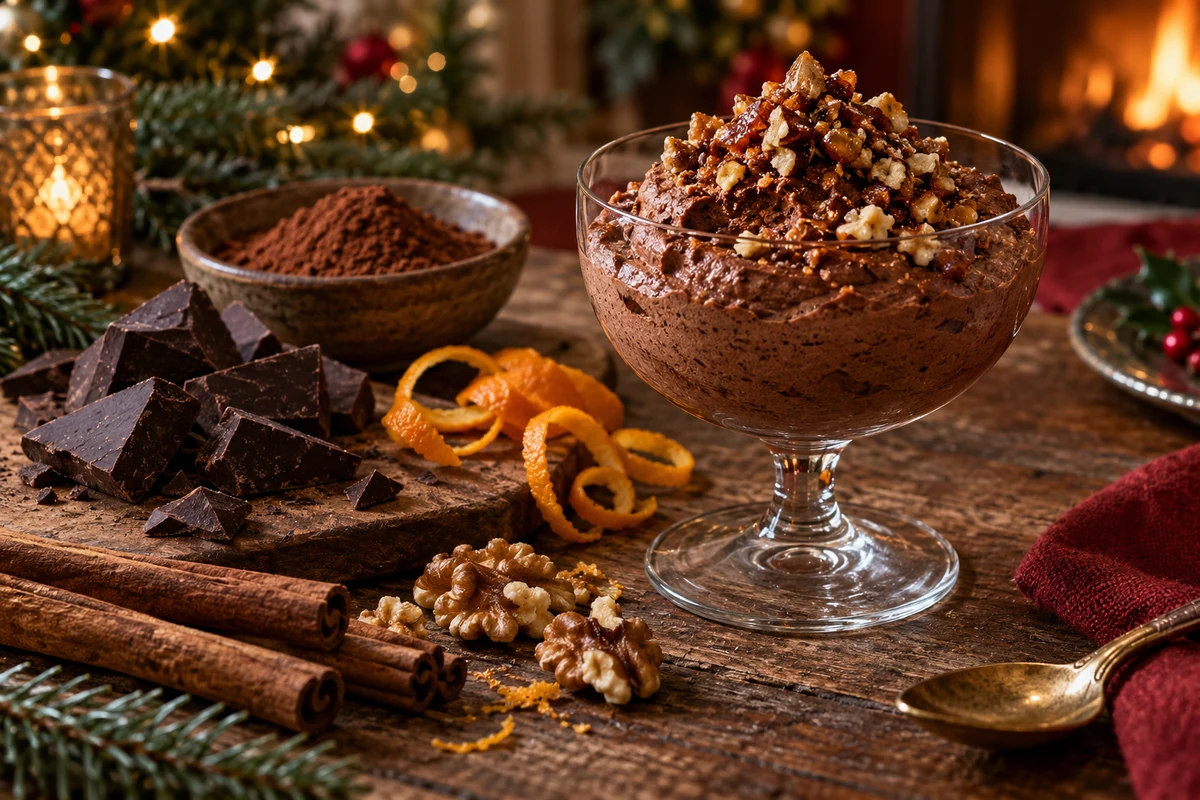
Good-quality nuts and chocolate give the dessert its flavour. Careful storage and gentle heating help preserve their texture.
Selecting and preparing ingredients
- Check the nuts: use sound nuts within their recommended storage period. Discard nuts that smell rancid or show mould; a shiny surface alone does not prove freshness.
- Toast gently: spread in a single layer and try 170°C conventional or 150°C fan for about 6–12 minutes, depending on size. Stir and check frequently, then cool before use.
- Caramel coating: melt 50 g sugar to amber, take off the heat and carefully stir in 150 g chopped nuts and 20 g butter. Spread on lined, heatproof equipment and leave until completely cold before handling.
- Melt chocolate gently: use a bowl over gently simmering water or short microwave bursts at low power, stirring frequently. Keep water out and stop before it scorches.
Storing the components
- Nuts: keep airtight, cool and away from strong light, following the packet’s guidance. Refrigeration can slow rancidity, but does not override a use-by date or signs of spoilage.
- Chocolate: store in a cool, dry place, ideally around 16–20°C if practical, away from strong odours and direct sunlight.
- Praline: keep in a dry, airtight container and add to the chilled mousse only at serving time.
Festive flavour combinations
- Citrus zest: orange or mandarin zest gives chocolate a fresh aroma without adding much liquid.
- Spices: a small pinch of cinnamon or nutmeg can add warmth without overpowering the cocoa.
- A little salt: a tiny pinch in the nut topping balances sweetness.
- Serving drinks: coffee or tea complement the chocolate. Offer orange liqueur separately if wanted, keeping alcohol-free portions distinct.
Substitutions and allergy awareness
- Without nuts: a suitable seed topping may be an option for some guests, but seeds can also cause allergies and may carry cross-contact warnings. Confirm the person’s needs rather than assuming seeds are universally safe.
- Without dairy: use an appropriate whippable plant-based cream, replace the topping butter and choose dairy-free chocolate. This still contains eggs unless the entire mousse recipe is changed.
- Explain ingredients clearly: label portions and use separate utensils for any specially prepared alternative.
A few ingredient notes
- Brazil nuts: these are one option for the topping, but a mixture lets you vary the flavour and texture. Use chopped pieces that are comfortable to eat.
- Cocoa and chocolate: cocoa powder gives an intense finish, while the cocoa butter in chocolate contributes to the mousse’s structure as it cools.
- Cocoa percentage: 50–70% is a practical starting point for this recipe. Higher percentages make a more intense dessert and can change firmness, so test before substituting.
Finishing touch: add chopped crunchy nuts and a little citrus zest without overwhelming the light mousse underneath.
Enjoy your Christmas dessert
Serve the chocolate mousse with crunchy nut praline well chilled, with the topping added at the last moment, and enjoy the contrast between smooth cream and crisp nuts.
Follow us on Instagram, Facebook and Pinterest for more Christmas recipes and seasonal ideas.
Visit the I Love Christmas blog for more festive desserts and serving inspiration.
Chocolate mousse with nut praline: frequently asked questions
How do I keep the mousse airy?
Use lukewarm, fluid chocolate, cream whipped to soft peaks and pasteurised whites whisked to firm, glossy peaks. Fold gently rather than beating, and stop when the mixtures are combined.
Can I make it vegan?
Yes, with a complete vegan mousse recipe. Replacing only the whites with aquafaba leaves yolks in the original, and replacing cream alone leaves other dairy ingredients. Check the chocolate and topping butter too; do not add an arbitrary amount of agar.
How do I keep the nut topping crunchy?
Cool it completely and store airtight in a dry place, separately from the mousse. Add immediately before serving so moisture from the dessert does not soften it.
How long can I store the mousse and topping?
Keep the mousse covered at 5°C or below and eat within 48 hours, or sooner if the ingredients require it. The dry praline is best made close to serving; in a dry airtight container it can retain quality for several days, but discard if damp or spoiled.
Can I prepare it before Christmas dinner?
Yes. Make the mousse the day before, keeping the total refrigerated storage within 48 hours. Prepare the topping separately and add it just before serving.
Which chocolate should I use?
Start with dark chocolate containing around 50–70% cocoa solids. Milk chocolate is sweeter and sets differently, while very dark chocolate can make a firmer mousse. Test changes in a small batch rather than assuming every chocolate behaves alike.
Sources and Further Reading
- Food Standards Agency: chilling, freezing and defrosting food safely
- Food Standards Agency: safe storage, handling and use of eggs