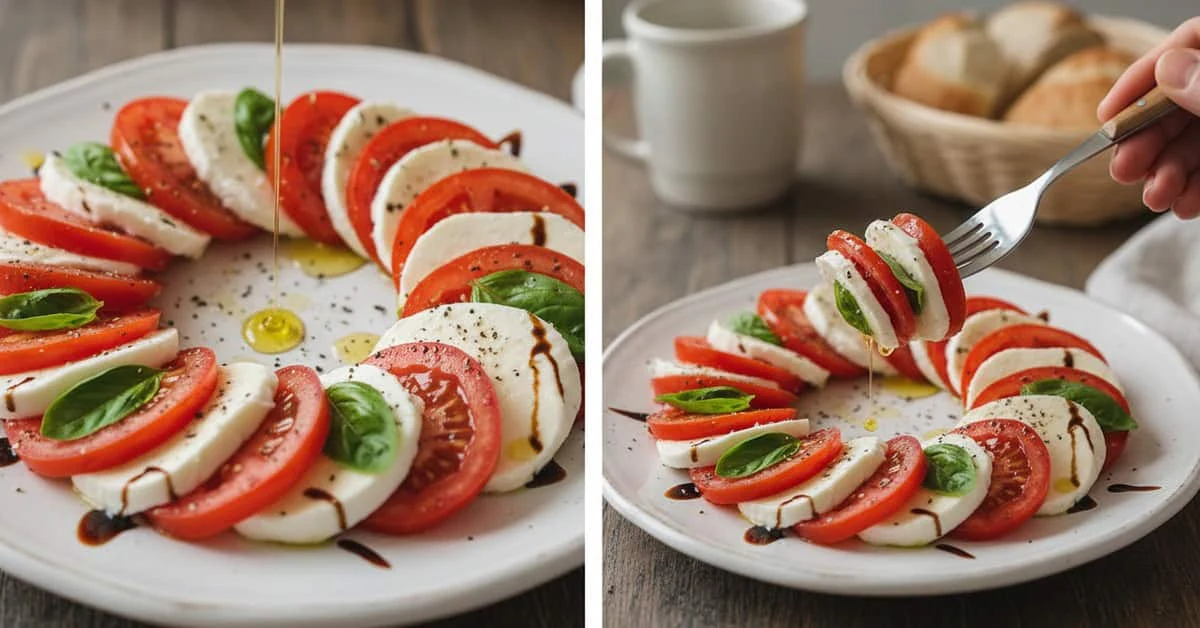
This Christmas caprese salad combines cherry tomatoes, fresh mozzarella and basil with olive oil and an optional balsamic glaze. Arrange it as a festive wreath, a sharing platter or individual portions, with variations using burrata, roasted tomatoes or a plant-based alternative.
Christmas caprese salad is an easy way to bring red, white and green to the festive table. Good tomatoes, well-drained mozzarella and fresh basil do most of the work; the Christmas element comes from the arrangement and optional pomegranate garnish.
Ingredients for Christmas caprese salad
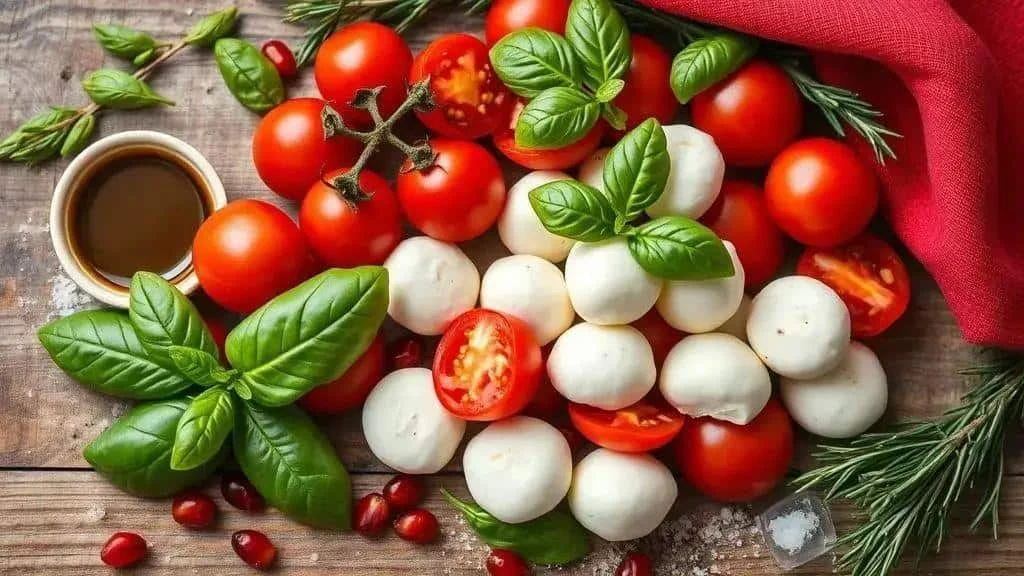
For this Christmas caprese salad, gather the following ingredients. The quantities make approximately four to six small starter portions.
- 300 g cherry tomatoes, washed, dried and halved. Baby plum tomatoes also work.
- 250 g fresh mozzarella, drained weight, in small balls or torn pieces. Choose buffalo mozzarella or cow’s-milk mozzarella; burrata is a creamier alternative.
- A generous handful of fresh basil leaves, approximately one loosely filled 240 ml cup, washed and dried. Baby basil is suitable; rocket creates a different variation.
- 2–3 tablespoons extra virgin olive oil. A mild avocado oil is an alternative, although it changes the flavour.
- 1–2 tablespoons balsamic glaze, optional. Alternatively, use about 1 tablespoon balsamic vinegar as a sharper dressing; it does not need to be reduced in such a small quantity.
- A small pinch of flaky sea salt, to taste. Add gradually, particularly if the cheese is already salty.
- Freshly ground black pepper, to taste.
- About 40 g pomegranate seeds, optional, for festive colour. A few softened dried cranberries offer a different, sweeter variation.
- 2–3 small food-grade rosemary or thyme sprigs, optional garnish. Remove woody stems before eating.
- Crusty bread or crostini, optional; slice and toast a small baguette to serve alongside.
How to make Christmas caprese salad
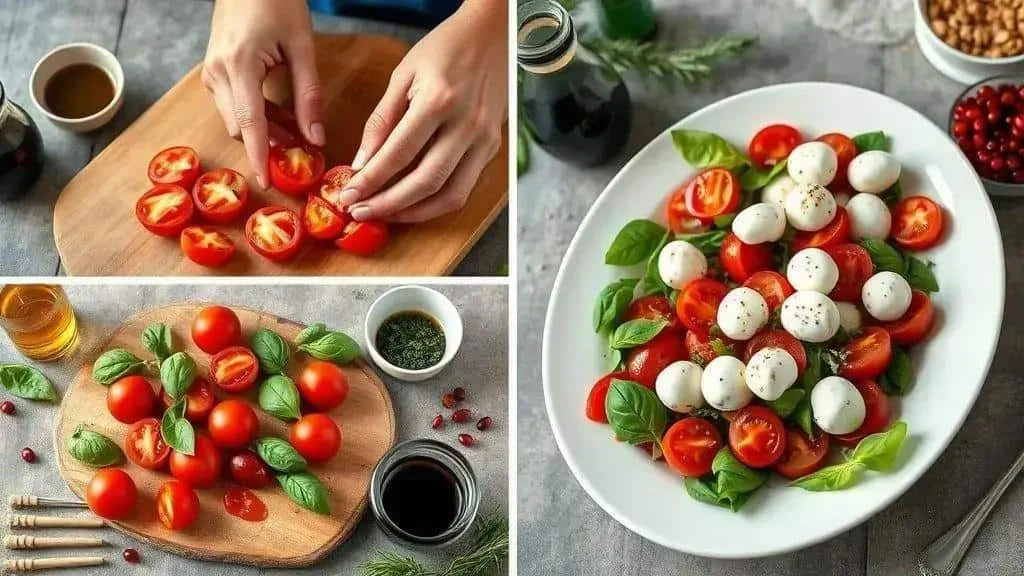
Prepare the components first, then assemble the Christmas caprese salad shortly before serving so the leaves look fresh and the platter does not become watery.
- Prepare the tomatoes: rinse the 300 g cherry tomatoes under running water, dry and halve with a sharp knife.
- Drain the mozzarella: drain 250 g mozzarella for a few minutes and gently blot excess liquid if needed. Keep it refrigerated while preparing the other ingredients.
- Prepare the basil: remove thick stems and gently dry the washed leaves without crushing them.
- Prepare the dressing: set out the measured olive oil and optional glaze separately. If using balsamic vinegar instead, whisk it with the oil and a small pinch of salt and pepper.
- Season the tomatoes: toss them gently with about half the oil or mixed dressing. Taste a tomato before adding more salt; keep within the total oil quantity listed.
- Arrange the salad: alternate tomatoes and mozzarella on a clean platter, tucking basil leaves between them. A ring with an open centre creates a wreath effect.
- Add the garnish: scatter over the optional pomegranate seeds and place a few small herb sprigs around the arrangement.
- Finish the dressing: drizzle over the remaining measured oil or dressing. If using glaze, apply the 1–2 tablespoons in fine lines rather than adding another unmeasured layer.
- Keep chilled until needed: cover and refrigerate if not serving immediately. There is no safety reason to limit refrigeration to 30 minutes; assembling near serving time is a matter of texture and appearance.
- Serve: offer the salad with crostini or crusty bread, with any extra seasoning on the side.
Quick tips
- Use a sharp, smooth-edged knife to avoid crushing the tomatoes.
- If using burrata, add it at the last moment and open it just before serving.
- Season gradually and taste before adjusting the salt or acidity.
Christmas caprese salad variations
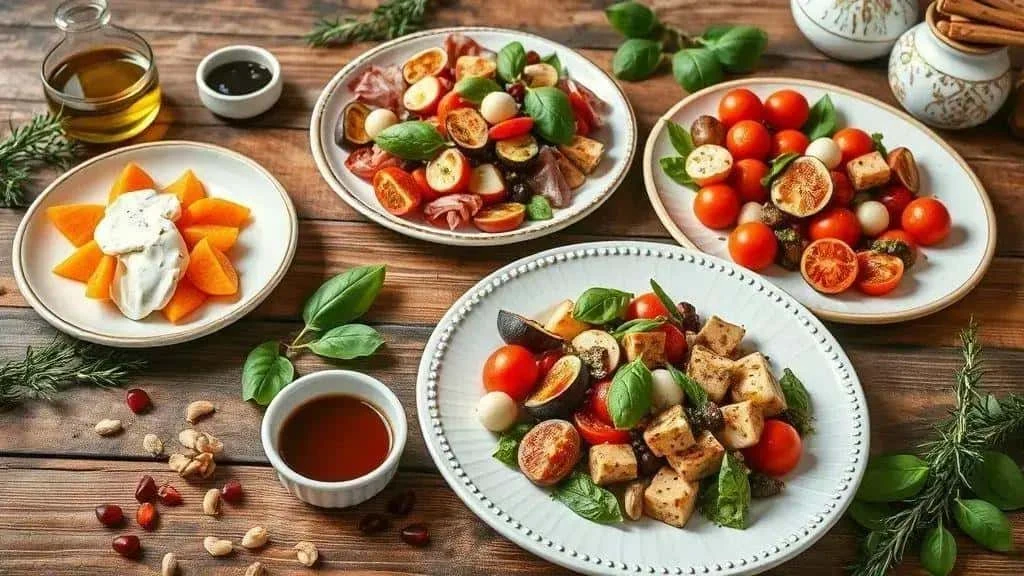
Adapt the Christmas caprese salad to suit your guests, while keeping the tomato, fresh-herb and creamy-cheese contrast at the centre of the dish.
Burrata and citrus
Replace the mozzarella with 200–250 g burrata for a creamier texture. Add a few well-drained orange or clementine segments and a little zest, then finish with oil and flaky salt.
Prosciutto and figs
Add a few thin slices of prosciutto and fresh fig wedges, or softened dried figs. This version contains meat; offer a separate vegetarian platter where needed.
Roasted tomatoes and balsamic glaze
Roast 300 g cherry tomatoes with a little of the measured oil and salt at 200°C conventional or 180°C fan for about 15–20 minutes, until softened. Let them cool before combining with the cold mozzarella, then add basil and optional glaze.
A vegan alternative
Replace the cheese with 200 g firm tofu or a suitable vegan mozzarella alternative. Use ready-to-eat tofu or prepare it according to its packet, then marinate with oil, lemon juice and herbs in the fridge. Check that any pesto is dairy-free and any sweetener is vegan.
Nuts, seeds and crunch
A couple of tablespoons of toasted pine nuts or chopped walnuts add crunch; pomegranate seeds add a fresh pop. Make nut ingredients clear and keep them separate if guests have allergies.
Herbs and aromatic additions
A few mint leaves, thyme leaves or rocket can accompany the basil. Lemon zest or a small pinch of chilli flakes changes the flavour without overwhelming the tomatoes.
Festive presentation
Arrange the salad as a wreath, make small cocktail skewers or serve in individual cups. For young children, remove skewers and cut tomatoes and cheese into age-appropriate pieces rather than serving whole round items.
Tips for a festive salad platter
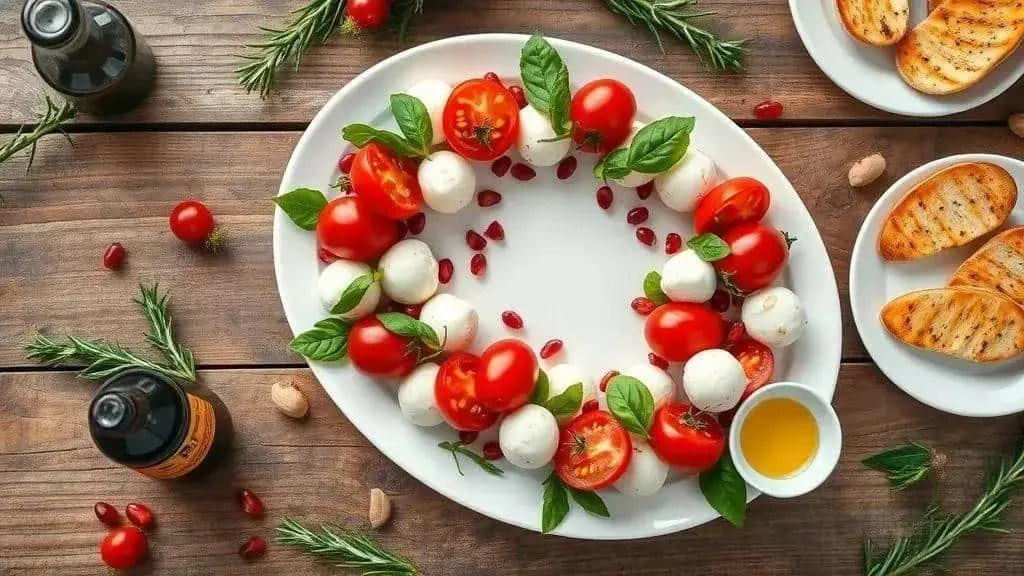
A white platter, dark food-safe board or simple rustic plate makes the tomato, cheese and basil colours stand out.
Assembly ideas
- A Christmas wreath: arrange halved tomatoes, small mozzarella pieces and basil in a ring, distributing the colours evenly.
- Cocktail skewers: thread tomato, mozzarella and basil onto small serving picks and dress just before serving. Keep sharp picks away from young children.
- Individual portions: layer tomatoes and mozzarella in small cups, then top with basil and a little glaze.
- Contrasting textures: scatter over pomegranate seeds or toasted pine nuts, noting the nut allergen where relevant.
- Colourful garnish: place a few small culinary rosemary or thyme sprigs around the edge. Avoid non-edible Christmas greenery.
- Measured dressing: use a spoon or squeeze bottle for fine lines of glaze. The 2–3 tablespoons of oil are the total for the salad, not an extra amount at every stage.
- Timing: assemble close to serving for the best appearance, but keep the cheese and prepared salad refrigerated whenever they are waiting.
Finishing touches
- A little flaky salt can bring out the tomato flavour; taste first.
- Freshly ground black pepper adds aroma without needing a heavy coating.
- A little lemon or orange zest suits the burrata variation.
- Keep crostini or toasted baguette slices on a separate plate so they stay crisp.
- Offer small pots of extra oil and glaze for guests who want more dressing.
Practical preparation and presentation
- Drain mozzarella shortly before assembly. If preparing earlier, follow its storage label and keep it chilled.
- Dry basil gently and add it last to reduce bruising and wilting.
- For a large gathering, prepare the components in batches and finish each platter shortly before it is needed.
- Transport the salad or its components in covered, stable containers in a cool bag with frozen ice packs.
- Arrange small serving sections with space for tongs so guests do not need to disturb the whole wreath.
Accompaniments and drinks for Christmas

Pair Christmas caprese salad with simple accompaniments that complement its fresh ingredients rather than masking them.
Side dishes
- Crusty bread and crostini: toasted baguette with a little oil and garlic contrasts with the soft mozzarella.
- A charcuterie plate: prosciutto, salami and olives can sit alongside figs or grapes on a separate platter.
- Roasted vegetables: roasted squash, peppers or grilled asparagus make a useful accompaniment.
- Risotto or pasta: small portions of lemon risotto or short pasta with oil and herbs turn the salad into part of a larger meal.
- Crunchy extras: cheese straws, sweet potato crisps or toasted nuts add texture. Use vegetarian-labelled cheese for vegetarian guests.
Drink pairings
- Dry sparkling wine or prosecco: an optional celebratory pairing for adults who drink alcohol.
- A fresh white wine: Sauvignon Blanc, Pinot Grigio or Vermentino can suit tomato and basil; serve chilled to your preference.
- Dry rosé: its fruit character can complement the herbs and fresh cheese.
- A lighter red wine: Pinot Noir or a young, lightly tannic red can work with the prosciutto-and-fig variation.
- Alcohol-free drinks: try sparkling water with citrus slices, or cranberry juice topped up with tonic or soda water.
- Long drinks: a spritz, gin and tonic or white-wine spritzer is another optional adult pairing. Provide alcohol-free choices alongside them.
Simple festive combinations
- A simple starter: caprese salad, olive-oil crostini and chilled sparkling water or prosecco.
- A richer sharing spread: burrata caprese with a separate prosciutto-and-fig plate and optional dry rosé.
- Warm and fresh: caprese with rosemary-roasted vegetables and a chilled drink.
- A vegan plate: marinated tofu salad, toasted wholemeal bread and citrus sparkling water.
Serving tips
- Quantity: allow about 80–120 g salad per person as a small starter, adjusting for the other dishes. This recipe provides roughly four to six such portions.
- Temperature: keep the cheese and prepared salad chilled until shortly before serving. Do not leave them out for hours to improve texture.
- Last-minute finishing: add the basil and final dressing shortly before taking the platter to the table.
- Guest choices: offer an alcohol-free drink and suitable dietary alternatives. Ham is not a general substitute for every food restriction; check what each guest needs.
- Presentation: neutral platters, pomegranate seeds and small culinary herb sprigs give a festive effect without clutter.
Storage and preparing ahead
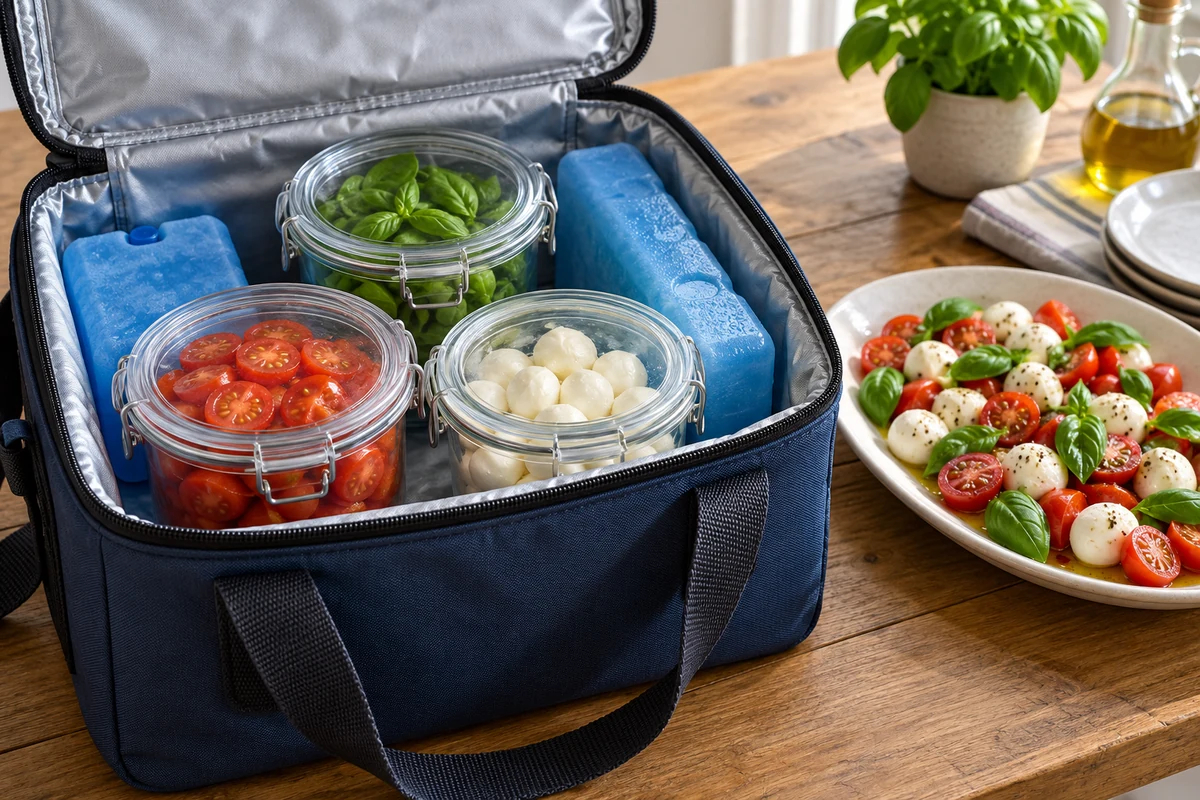
A little organisation keeps Christmas caprese salad attractive without compromising chilled storage. Prepare components separately and leave the final dressing until serving.
Storing the ingredients
- Cherry tomatoes: wash and dry before cutting. Refrigerate cut tomatoes in a clean covered container and use promptly; leaving cut fruit uncovered is unnecessary.
- Fresh mozzarella: follow the packet’s refrigeration, use-by and after-opening instructions. Keep it in its supplied liquid where directed; replacing that liquid with tap water does not extend its safe life.
- Basil: keep leaves dry enough not to become slimy and follow any packet storage advice. Wash and dry gently before serving; add them to the chilled salad at the last moment.
- Oil and balsamic glaze: follow the labels for storage, including refrigeration after opening if required. Refrigerate homemade mixed dressings, especially those containing fresh ingredients.
- Pomegranate seeds and nuts: keep fresh seeds refrigerated and follow their use-by date. Store dry nuts airtight in a cool place according to the packet; the two ingredients do not share one fixed storage life.
A make-ahead schedule
- The day before: check the ingredients and their dates, prepare serving dishes and keep mozzarella chilled in accordance with its label. Buy ready-made glaze if you want to avoid another preparation step.
- A few hours before: cut tomatoes if necessary and refrigerate covered. Prepare crostini, cool completely and keep airtight; wash and dry herbs near serving time.
- Shortly before serving: drain the cheese, arrange the salad, then add basil and dressing. Refrigerate the platter if there is a delay.
Transport and assembly at the venue
- Carry tomatoes, mozzarella, basil, seeds and dressing separately in suitable covered containers to reduce leaking and wilting.
- Use a cool bag or box with frozen ice packs for mozzarella and other chilled ingredients, even for a relatively short journey.
- A small squeeze bottle or spoon makes it easier to apply the glaze without flooding the platter.
- At the venue, use a clean, dry platter and arrange the ingredients in layers or a wreath. Keep unused portions chilled.
During service
- Serve small platters and replenish from the fridge. As a conservative home-buffet plan, avoid more than two hours in total out of refrigeration, and shorten this in hot conditions. This is not a statement of commercial catering rules; follow product instructions and discard food if its safe storage is uncertain.
- Keep extra dressing separate so guests can add it without making the whole salad wetter.
- Provide clean serving utensils and small pots for oil, glaze and pepper.
A quick checklist
- Prepared ingredients: tomatoes cut, mozzarella drained close to use and basil gently dried.
- Separate dressing: measured oil and optional glaze ready to apply.
- Serving tools: tongs, a dressing spoon and a clean platter.
- Garnishes: food-grade herbs, pomegranate seeds and crostini on the side.
- Timing: finish near serving time and return the platter to the fridge if guests are delayed.
About caprese salad and its ingredients
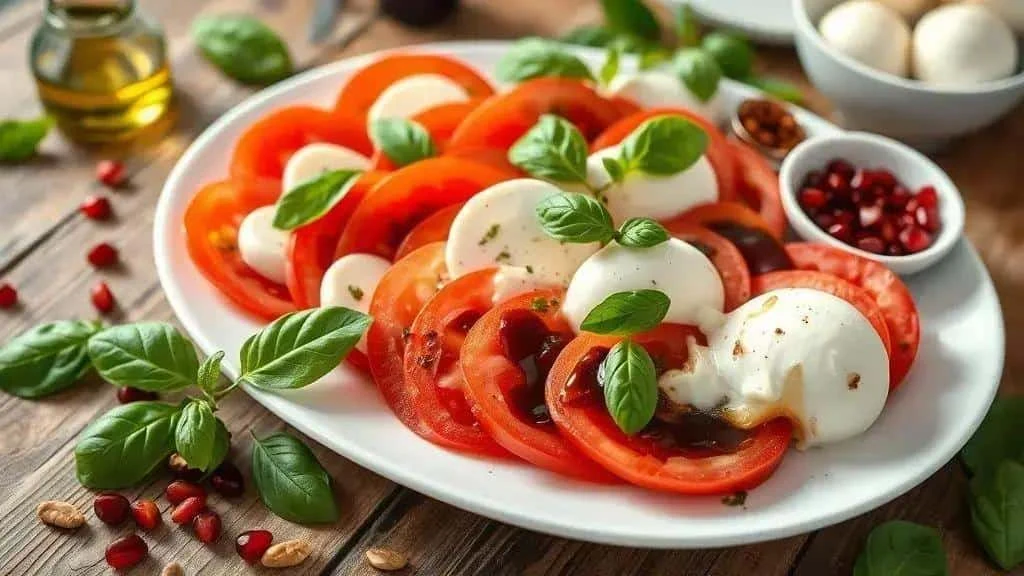
The appeal of caprese salad lies in a short ingredient list and the contrast between ripe tomatoes, fresh cheese and aromatic basil.
The name
The name caprese refers to Capri, the Italian island associated with the dish. Stories about its exact invention vary; this recipe does not rely on one disputed origin story.
The colours
Tomatoes, mozzarella and basil give the salad its red, white and green colours. They echo the Italian flag and also lend themselves to a Christmas presentation.
The simple combination
Tomato, fresh mozzarella, basil, olive oil and salt form the familiar combination. Balsamic glaze and pomegranate are optional additions in this festive adaptation rather than essential ingredients in every caprese.
Choosing mozzarella
Buffalo mozzarella is made with buffalo milk. Bocconcini describes small mozzarella balls, not a guarantee of the milk source; fior di latte is cow’s-milk mozzarella. Check the label and choose the texture you prefer.
A balanced view of the dish
The salad combines vegetables, cheese and oil, but its richness depends on the amount of cheese, dressing and bread served with it. It need not be described as low-calorie or as providing a specific health benefit to be enjoyable.
Seasonal variations
Burrata, figs, roasted tomatoes or prosciutto change the basic combination. Pomegranate seeds and a wreath shape provide the Christmas theme in this version.
Serving context
Caprese can be served as a starter or part of a sharing meal. Its strong colours make it useful for a festive platter without requiring elaborate decoration.
Conclusion
Christmas caprese salad offers a fresh contrast to richer festive dishes. Drain the ingredients, use the dressing sparingly and keep the cheese chilled until needed; the simple arrangement supplies most of the decoration.
Thank you for reading. Share your version with us on social media and visit I Love Christmas for more seasonal recipes and ideas.
FAQ – Christmas Caprese Salad
How should I store mozzarella before assembling the salad?
Keep it refrigerated and follow the packet’s use-by and after-opening instructions, including whether to retain its supplied liquid. Drain close to assembly; adding fresh water does not renew its safe storage life.
Can I make a vegan version?
Yes. Use suitable vegan mozzarella or firm tofu prepared according to its packet, then marinated with oil, lemon and herbs. Check pesto, glaze and bread ingredients too, and avoid honey in a vegan dressing.
Which ingredients make the salad festive?
Pomegranate seeds, small culinary rosemary sprigs and optional citrus segments bring seasonal colour. Toasted pine nuts add crunch; keep nuts separate if allergies are a concern.
Can I prepare it ahead for a large Christmas meal?
Prepare the tomatoes and cheese separately, cover and keep refrigerated. Assemble shortly before serving and add basil and dressing last; return the platter to the fridge if it has to wait.
What is the easiest party presentation?
A wreath-shaped sharing platter or individual cups are straightforward. Cocktail skewers are another option for adults, but remove sharp picks and cut round foods appropriately for young children.
How much should I allow per person?
Allow about 80–120 g per person for a small starter, depending on the other dishes. The quantities in this recipe make approximately four to six starter portions.
Sources and Further Reading
- Food Standards Agency: cooking food safely
- Food Standards Agency: chilling, freezing and defrosting food safely
- Italian Embassy: A Taste of Italy